Tag: Serial Killer

  • The Devil in the Darkness: How the Night Stalker Terrorized California Until One Mistake Led to His Arrest

    The Devil in the Darkness: How the Night Stalker Terrorized California Until One Mistake Led to His Arrest

    Image
    Image
    Image
    Image

    Here is a brand-new true crime article package for your website.

    The Devil in the Darkness: How the Night Stalker Terrorized California Until One Mistake Led to His Arrest


    During the summer of 1985, people across California began changing the way they lived.

    Windows stayed locked even during hot nights. Families slept with lights on. Hardware stores sold more locks and alarms than usual. News broadcasts opened with warnings.

    No one knew where the killer would strike next.

    He attacked without following normal patterns. Victims were young and old. Homes were chosen across multiple communities. Police struggled to predict his movements.

    The man responsible became known as the Night Stalker.

    His real identity would remain hidden until one extraordinary investigation—and one critical mistake—ended the fear.

    This is the true story of the murders, the search, and the arrest.


    A Series of Unexplained Attacks

    The crimes began appearing in California during the mid-1980s.

    Victims were attacked in their homes, usually during nighttime hours.

    What made the case especially difficult was the lack of a clear victim profile.

    Some victims were elderly.

    Others were younger adults.

    Different neighborhoods were targeted.

    Investigators initially wondered whether multiple offenders might be involved.

    The attacks appeared random.

    But detectives began connecting details.

    Entry methods looked similar.

    Witness descriptions repeated.

    Physical evidence suggested a single offender.

    Fear spread quickly across the state.


    The Killer’s Method

    Investigators discovered that the offender preferred entering homes at night.

    He often selected vulnerable access points and moved quickly.

    Victims described sudden violence and intimidation.

    Unlike criminals who targeted only money or valuables, this offender created confusion by changing behavior between attacks.

    This unpredictability made it extremely difficult for detectives.

    Traditional profiling methods produced few useful leads.

    Law enforcement agencies from different areas began sharing information.

    The investigation expanded.

    A task force formed.

    Evidence technicians reviewed every detail.


    Building the Investigation

    As attacks continued, pressure on investigators increased.

    Detectives examined:

    • Witness statements
    • Footwear impressions
    • Vehicle reports
    • Neighborhood patterns
    • Physical evidence collected from scenes

    One clue became especially important.

    Investigators recovered a distinctive shoe print.

    This allowed detectives to compare evidence across crime scenes.

    Another breakthrough came from public awareness.

    Television reports and newspapers spread information rapidly.

    Citizens began reporting suspicious activity.

    Police hotlines received thousands of calls.

    Most led nowhere.

    But every new report helped narrow possibilities.


    The Critical Mistake

    After months of investigation, detectives recovered physical evidence connected to a vehicle.

    Inside the vehicle, investigators located information that eventually pointed toward a suspect.

    Authorities identified a name:

    Richard Ramirez.

    His photograph was released publicly.

    Once his face appeared in media coverage, events moved quickly.

    Unlike earlier weeks when the suspect remained anonymous, citizens now knew who police were searching for.

    People across California watched news reports closely.

    The manhunt entered a new phase.


    Citizens Become Part of the Hunt

    One of the most remarkable moments in the case happened after Ramirez realized his identity had become public.

    According to reports from the investigation, he attempted to move through public areas while avoiding police.

    But people recognized him.

    Citizens alerted authorities.

    Some individuals confronted him directly.

    Witnesses helped prevent his escape until law enforcement arrived.

    After months of fear, the community itself became part of ending the case.

    Police took Ramirez into custody in August 1985.

    The arrest marked the end of one of the most intense manhunts in modern California history.


    The Trial

    The legal process attracted enormous public attention.

    Court proceedings lasted for years.

    Prosecutors presented extensive physical evidence and testimony.

    Families described the impact of losing loved ones.

    Investigators explained how evidence from multiple locations connected the crimes.

    The trial became one of the most closely watched criminal proceedings in the United States.

    For survivors and relatives, the courtroom represented more than punishment.

    It represented answers.


    Lessons from the Investigation

    The Night Stalker investigation changed how agencies handled serial crime cases.

    Departments improved communication.

    Evidence sharing expanded.

    Public alerts became more coordinated.

    The case demonstrated how investigations often depend on many small breakthroughs instead of one dramatic discovery.

    Detective work.

    Forensics.

    Witness accounts.

    Public cooperation.

    Each piece mattered.


    Final Thoughts

    The Night Stalker case remains one of the most unforgettable criminal investigations in American history.

    For months, fear traveled faster than facts.

    But persistence, evidence gathering, and public awareness eventually led investigators to the suspect.

    The arrest showed that even when criminals appear impossible to identify, investigations can succeed through patience and coordination.

    One mistake by the perpetrator ended a campaign of fear—and closed one of America’s most notorious murder cases.

    Alt Text for Images

    1. Composite police sketch used during the Night Stalker investigation
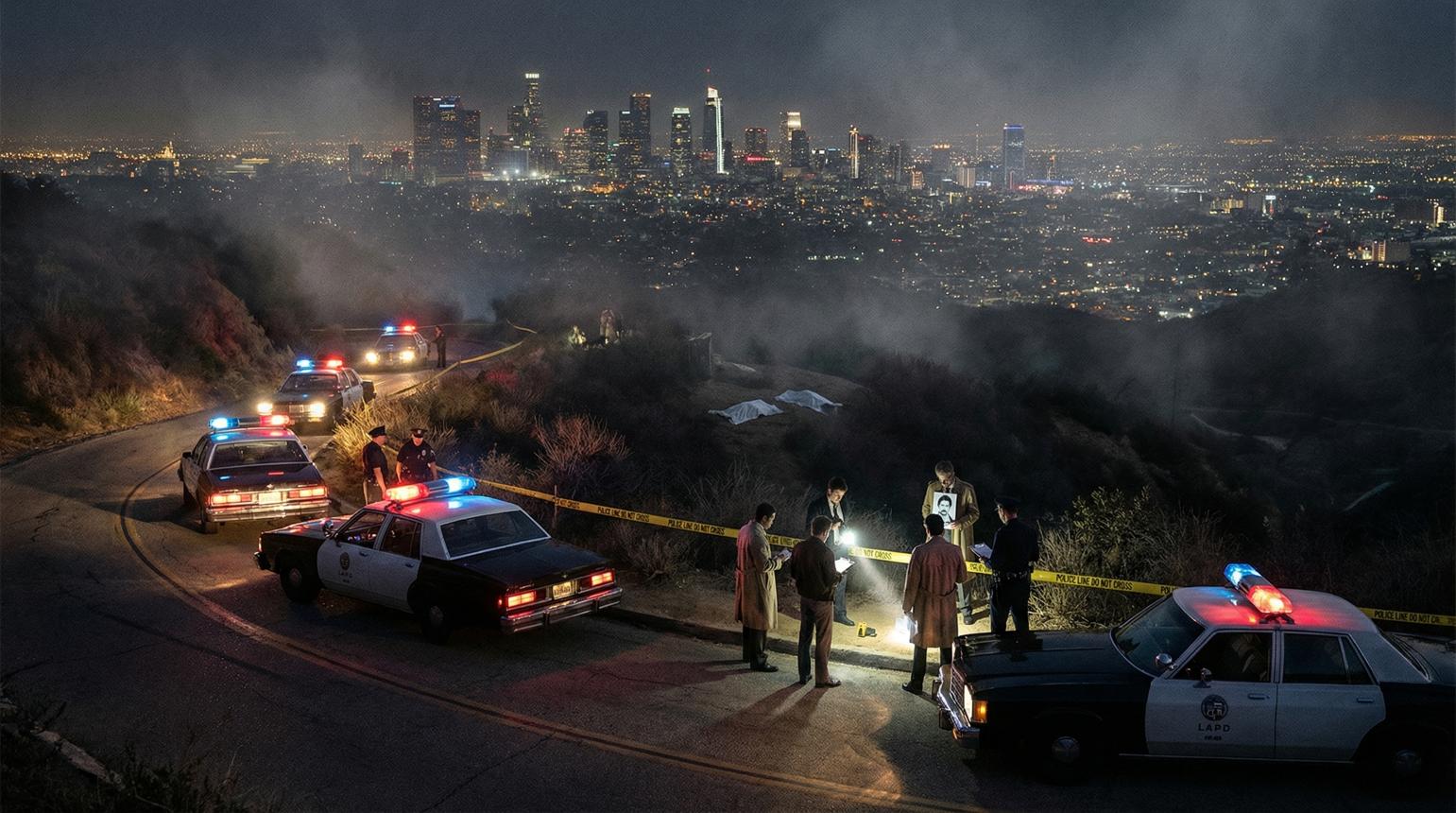
    2. Night view of Los Angeles representing the period of fear in California
    3. Detectives organizing evidence during a serial murder investigation
    4. Neighborhood watch activity during heightened public concern
    5. Crowd and police scene connected to the arrest of the suspect
    6. Courtroom illustration during the criminal trial
    7. Memorial candles honoring victims and survivors
  • The Man Who Hid in Plain Sight: How Investigators Finally Captured America’s Golden State Killer

    The Man Who Hid in Plain Sight: How Investigators Finally Captured America’s Golden State Killer

    Image
    Image
    Image
    Image
    Image

    For your website, here is a full true-crime article package with headline, images, alt text, category, and tags.

    The Man Who Hid in Plain Sight: How Investigators Finally Captured America’s Golden State Killer


    For decades, fear moved quietly through neighborhoods across California. Windows were locked earlier. Porch lights stayed on longer. Families learned to fear sounds in the night.

    The man responsible seemed impossible to catch.

    He broke into homes, attacked couples, murdered victims, and disappeared without leaving enough evidence to identify himself. Investigators chased leads for years. Sketches circulated. Witnesses remembered details. Yet the killer remained invisible.

    Eventually, a breakthrough would come not from a confession or eyewitness—but from science.

    This is the true story of how the Golden State Killer was hunted and finally arrested.

    A Wave of Terror Begins

    The crimes began in the mid-1970s in California.

    At first, investigators believed they were dealing with a burglar. Homes were entered at night. Victims described a careful intruder who studied routines and selected targets in advance.

    Soon the attacks escalated.

    Women were assaulted in their homes. Couples were tied up. Victims described an offender who seemed organized, patient, and frighteningly calm.

    As the years passed, the attacks spread across different regions.

    Police departments initially believed they were investigating separate criminals because communication between jurisdictions was limited. Different nicknames appeared in reports:

    • The East Area Rapist
    • The Original Night Stalker
    • The Visalia Ransacker

    No one realized immediately that one person might be responsible.

    By the late 1970s and early 1980s, murders began appearing alongside the assaults.

    Entire communities lived under constant anxiety.


    The Killer’s Methods

    Investigators noticed patterns.

    The offender often entered homes late at night.

    He appeared to watch victims beforehand and sometimes made disturbing phone calls.

    Victims reported that he moved quietly and carefully. He often brought tools and planned escape routes.

    This was not random violence.

    Detectives believed the offender studied neighborhoods and learned household routines before attacking.

    His ability to disappear frustrated investigators.

    Thousands of tips arrived.

    None produced an arrest.


    Years Turn Into Decades

    By the 1980s, active attacks stopped.

    But the case remained open.

    Boxes of evidence filled storage rooms.

    Detectives retired.

    New investigators inherited old files.

    Families of victims continued waiting for answers.

    Cold-case teams revisited evidence using improved forensic methods.

    DNA testing became more advanced over time.

    Eventually, investigators confirmed that multiple crime scenes were connected.

    One offender.

    Dozens of attacks.

    Multiple murders.

    But there was still no name.


    A Revolutionary Investigation

    Everything changed when investigators adopted a new strategy.

    Instead of searching traditional criminal databases, they explored genetic genealogy.

    Crime-scene DNA was compared against publicly available family-history databases.

    The goal was not to find the killer directly.

    The goal was to locate relatives.

    Investigators built family trees and narrowed possibilities.

    This process required months of patient research.

    One name eventually stood out:

    Joseph James DeAngelo.

    DeAngelo had once worked as a police officer.

    Investigators quietly monitored him.

    They collected discarded DNA from items he had thrown away.

    The results matched.

    After decades of uncertainty, authorities finally had their suspect.


    The Arrest

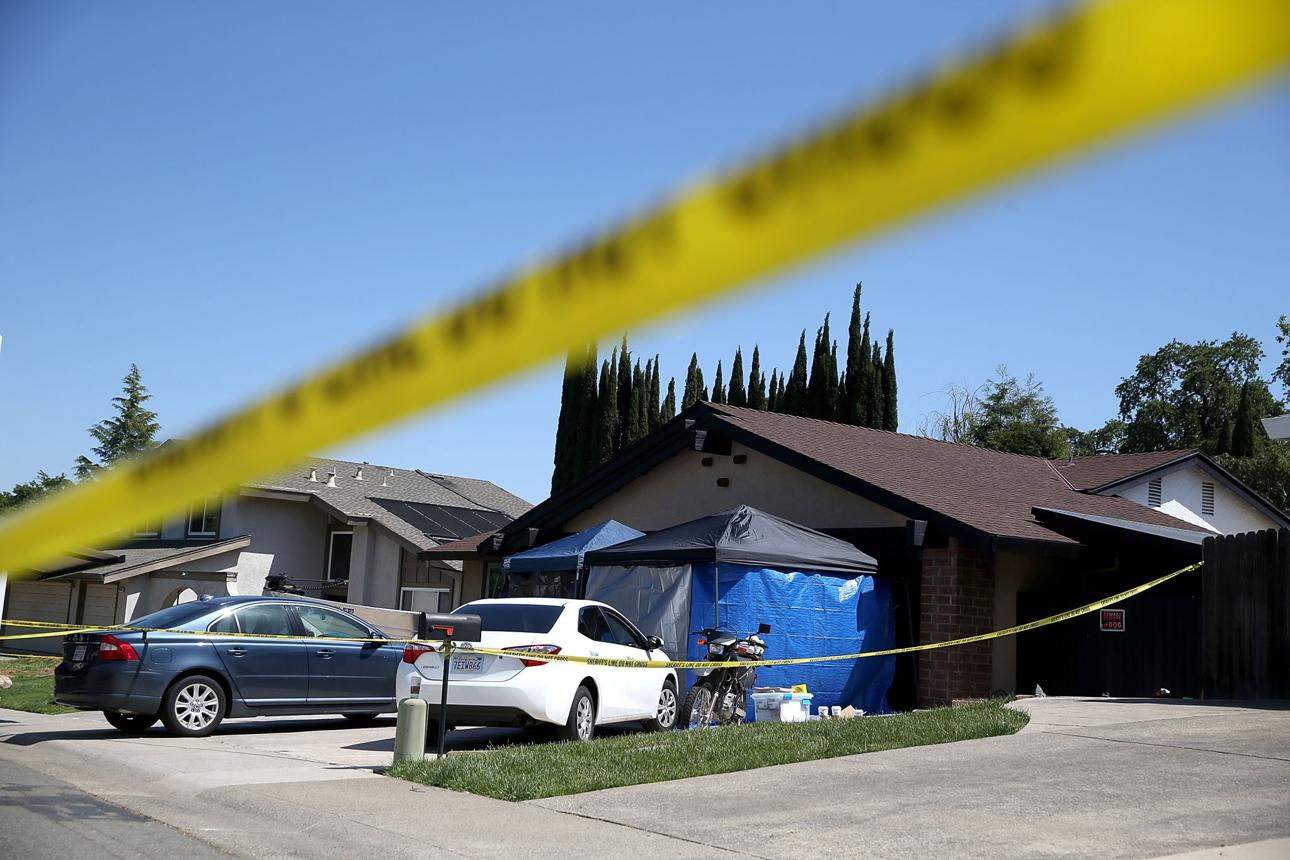
    In April 2018, officers arrested Joseph James DeAngelo outside his home.

    Neighbors were stunned.

    Many described him as ordinary.

    That realization shocked the public.

    The suspect had blended into everyday life for decades.

    He had worked regular jobs.

    He lived quietly.

    Yet investigators believed they had finally identified one of America’s most notorious serial offenders.

    News of the arrest spread across the country.

    For many families, it was the first moment they believed justice might finally arrive.


    Court Proceedings and Accountability

    The legal process that followed was emotional.

    Victims and family members spoke publicly.

    Many described decades of fear and unanswered questions.

    In 2020, DeAngelo admitted responsibility across numerous crimes.

    Statements from survivors became some of the most powerful moments in court.

    The sentencing brought closure for many families, even though nothing could undo the harm.

    The case became a landmark example of how forensic science and persistence can solve long-unsolved investigations.


    The Legacy of the Case

    The Golden State Killer investigation changed criminal investigations across the United States.

    Genetic genealogy became a powerful investigative tool.

    Cold cases received renewed attention.

    Police departments began reviewing evidence stored for decades.

    The case also reminded investigators that solving crimes sometimes requires patience measured not in days—but in generations.

    For victims’ families, the arrest represented something deeply human:

    the belief that answers can still arrive, even after many years.


    Final Thoughts

    The Golden State Killer case remains one of the most significant criminal investigations in American history.

    For more than forty years, investigators pursued leads, protected evidence, and refused to abandon the search.

    When science finally caught up with the case, one of America’s longest-running manhunts came to an end.

    Justice arrived slowly.

    But it arrived.

    Suggested Alt Text (for the 7 images)

    1. Composite sketch of the Golden State Killer used during investigation
    2. Quiet California neighborhood connected to the murder investigation
    3. Crime investigators reviewing evidence and case files
    4. Forensic laboratory performing DNA analysis
    5. Police arrest scene connected to the Golden State Killer case
    6. Courtroom illustration during sentencing proceedings
    7. Memorial candles honoring victims of the case
  • The Zodiac Killer Mystery: Why a 50-Year-Old Murder Case Could Still Be Solved Today

    The Zodiac Killer Mystery: Why a 50-Year-Old Murder Case Could Still Be Solved Today

    https://images.openai.com/static-rsc-4/jfe5lb_XJG9pz3rUVHyUYYH6D4jXXR-Ere9nR6S0vrPA8Nim_H1EQSoonNP_zorGNt7se7d-DnHxqmi2qwjGWTyoXBjuW9ZkXmAMiBJxl8FAvvvJsK4ha6PDVW9NRY8_vaDDwxqXwL4tme1GDnb9UaF_NNIfH46jofT8Jy5eHx9A1NhYYwJNKoeBOgARFSsU?purpose=fullsize
    https://images.openai.com/static-rsc-4/Ek84n9rnw__3p9cMUE4o4KlymhlrtGRyiUT30D6_zXtLr87matgOIk48ghSM22wKF0E-DnOGQB_z0-fFUezsofx_Pik3O2MlTRwX39EBpS1vUaJNnPrqvSV9jELFyAhHYdmCnbQKBylMsWstUhGWZELOm_KU-vX7kSgf4gDkUzKL7F7srK3U3dROOY_tp3pw?purpose=fullsize
    https://images.openai.com/static-rsc-4/XIxixKLfdGWgaX3xJcNYtGEqTvJjh2iw08jsTek8BYhHfqzRys0uwwewot5ENBi9C0mKrnzHRmSIFquZYnuKNDZz0FcLaH12LnoheQBQZQQOODPMmu_Fdu5Xlwu5SAmMQYv0ws4AwcP4C7P0G3VgR0Xr1xqyIWQ_viwa6KRnoBEz9LCU--T9xHPiX3QJrslo?purpose=fullsize

    The Zodiac Killer Mystery: Why a 50-Year-Old Murder Case Could Still Be Solved Today

    For more than half a century, the Zodiac Killer has remained one of the most infamous unidentified murderers in criminal history. Despite extensive investigations, media attention, and countless theories, authorities have never officially identified the person responsible for a string of murders and attacks that terrorized Northern California in the late 1960s and early 1970s.

    What makes the Zodiac case particularly fascinating is that it is not a mystery buried in the past with no remaining evidence. On the contrary, many investigators believe the case still has the potential to be solved. Thanks to advances in forensic science, DNA analysis, digital records, and artificial intelligence, evidence that once seemed impossible to interpret may finally reveal the truth.

    More than fifty years after the murders, the Zodiac Killer remains both a symbol of fear and one of the world’s most compelling cold cases.

    A Killer Who Wanted Attention

    The Zodiac Killer first emerged in public consciousness after a series of attacks on young couples in Northern California. Unlike many murderers who attempted to avoid attention, the Zodiac actively sought publicity.

    Following several attacks, the killer mailed letters to newspapers. These messages contained disturbing details about the crimes and included cryptograms, symbols, and threats. The letters quickly captured national attention and transformed the case from a local murder investigation into a media phenomenon.

    The killer adopted the name “Zodiac” and developed a unique symbol that appeared in many communications. Over time, the letters became just as famous as the murders themselves.

    The combination of violence, mystery, and public taunting created an unprecedented challenge for law enforcement agencies.

    The Confirmed Victims

    Authorities officially connect the Zodiac Killer to several murders and attacks between 1968 and 1969, although the exact number of victims remains debated.

    The first confirmed attack occurred on December 20, 1968, when teenagers David Faraday and Betty Lou Jensen were shot near Vallejo, California.

    Several months later, another young couple, Darlene Ferrin and Michael Mageau, were attacked in a parked vehicle. Ferrin was killed, while Mageau survived and later provided descriptions of the suspect.

    The most chilling attack occurred at Lake Berryessa in September 1969. In this case, the killer approached victims wearing an unusual hooded costume marked with the Zodiac symbol. Bryan Hartnell survived the attack and provided investigators with valuable information about the encounter.

    The final officially confirmed Zodiac murder involved taxi driver Paul Stine in San Francisco. This crime occurred in a populated urban area and generated numerous witness accounts.

    Despite these clues, investigators were never able to identify the killer with certainty.

    The Cipher That Captivated the World

    One reason the Zodiac case remains famous is the killer’s obsession with codes and puzzles.

    Several cryptograms were mailed to newspapers. Some were solved quickly, revealing disturbing messages and references to the killer’s motives.

    Others remained unsolved for decades.

    In 2020, a team of code-breaking enthusiasts successfully deciphered one of the Zodiac’s most famous encrypted messages after it had remained unsolved for more than fifty years. The achievement demonstrated how modern computing power and collaborative analysis can unlock evidence that once seemed impossible to understand.

    The successful decryption renewed public interest in the case and raised hopes that other clues could eventually lead investigators to the killer’s identity.

    Why the Case Was So Difficult to Solve

    The Zodiac investigation faced numerous obstacles.

    Law enforcement agencies in different jurisdictions were often working independently. Information sharing was far more limited than it is today.

    Forensic technology in the late 1960s was primitive compared to modern standards. DNA profiling did not yet exist, surveillance cameras were uncommon, and digital databases were decades away.

    Investigators relied heavily on witness statements, fingerprints, and physical evidence collected from crime scenes. While valuable, these methods had significant limitations.

    The killer also appeared to understand how to avoid leaving obvious clues. Many crime scenes produced little usable evidence, allowing the suspect to evade identification.

    As years passed, memories faded, witnesses died, and leads grew cold.

    Yet the case never completely disappeared.

    Modern Technology Changes Everything

    Today, cold-case investigations are benefiting from technological breakthroughs that were unimaginable when the Zodiac crimes occurred.

    DNA testing is perhaps the most significant advancement. Even tiny biological traces can sometimes be analyzed decades after a crime. Investigators have repeatedly revisited Zodiac evidence in hopes of obtaining a usable genetic profile.

    Another major development is forensic genealogy. This technique has helped solve numerous cold cases by comparing DNA samples with publicly available family-history databases.

    The method gained international attention after helping identify the Golden State Killer decades after his crimes.

    Artificial intelligence also offers new possibilities. Investigators can now analyze thousands of documents, compare handwriting samples, identify patterns in evidence, and cross-reference records far more efficiently than previous generations.

    Digital enhancement technologies can improve old photographs, letters, and fingerprints, potentially revealing details that investigators once missed.

    Each advancement increases the possibility that long-forgotten evidence could finally provide a breakthrough.

    The Endless List of Suspects

    Over the years, dozens of individuals have been proposed as potential Zodiac suspects.

    Some were investigated by law enforcement. Others emerged through books, documentaries, and independent research.

    Several suspects appeared promising because of their backgrounds, locations, handwriting similarities, or connections to specific crimes. Yet none could be conclusively linked to all of the Zodiac attacks.

    The lack of definitive evidence has fueled decades of speculation.

    Some researchers remain convinced the killer’s identity is hidden somewhere within existing case files. Others believe future DNA testing will eventually provide the answer.

    Regardless of the theory, no suspect has ever been officially confirmed by authorities.

    Why Solving the Case Still Matters

    Some people wonder why investigators continue pursuing crimes committed more than fifty years ago.

    The answer is simple: justice has no expiration date.

    Families of victims deserve answers, regardless of how much time has passed. Solving a case can provide closure for relatives who have spent decades living with uncertainty.

    Cold-case investigations also serve a broader purpose. They demonstrate that serious crimes are never forgotten and that advances in science can continue to uncover the truth long after a criminal believes they have escaped accountability.

    Every solved cold case reinforces public confidence in the justice system.

    Could the Zodiac Killer Finally Be Identified?

    No one can predict whether the Zodiac Killer case will ultimately be solved.

    However, the odds are better today than they were twenty years ago.

    The success of forensic genealogy in other historic investigations has transformed the way detectives approach cold cases. Evidence once considered insignificant may now hold critical information.

    Investigators continue to review physical evidence, compare DNA samples, and evaluate new leads. Advances in artificial intelligence and forensic science are creating opportunities that simply did not exist during the original investigation.

    The mystery that has fascinated the world for more than half a century may still have an answer waiting to be discovered.

    Until then, the Zodiac Killer remains one of the greatest unsolved murder mysteries in modern history—a chilling reminder that even the most elusive criminals can never be completely beyond the reach of justice.