Tag: history

  • The Man Who Hid in Plain Sight: How Investigators Finally Captured America’s Golden State Killer

    The Man Who Hid in Plain Sight: How Investigators Finally Captured America’s Golden State Killer

    Image
    Image
    Image
    Image
    Image

    For your website, here is a full true-crime article package with headline, images, alt text, category, and tags.

    The Man Who Hid in Plain Sight: How Investigators Finally Captured America’s Golden State Killer


    For decades, fear moved quietly through neighborhoods across California. Windows were locked earlier. Porch lights stayed on longer. Families learned to fear sounds in the night.

    The man responsible seemed impossible to catch.

    He broke into homes, attacked couples, murdered victims, and disappeared without leaving enough evidence to identify himself. Investigators chased leads for years. Sketches circulated. Witnesses remembered details. Yet the killer remained invisible.

    Eventually, a breakthrough would come not from a confession or eyewitness—but from science.

    This is the true story of how the Golden State Killer was hunted and finally arrested.

    A Wave of Terror Begins

    The crimes began in the mid-1970s in California.

    At first, investigators believed they were dealing with a burglar. Homes were entered at night. Victims described a careful intruder who studied routines and selected targets in advance.

    Soon the attacks escalated.

    Women were assaulted in their homes. Couples were tied up. Victims described an offender who seemed organized, patient, and frighteningly calm.

    As the years passed, the attacks spread across different regions.

    Police departments initially believed they were investigating separate criminals because communication between jurisdictions was limited. Different nicknames appeared in reports:

    • The East Area Rapist
    • The Original Night Stalker
    • The Visalia Ransacker

    No one realized immediately that one person might be responsible.

    By the late 1970s and early 1980s, murders began appearing alongside the assaults.

    Entire communities lived under constant anxiety.


    The Killer’s Methods

    Investigators noticed patterns.

    The offender often entered homes late at night.

    He appeared to watch victims beforehand and sometimes made disturbing phone calls.

    Victims reported that he moved quietly and carefully. He often brought tools and planned escape routes.

    This was not random violence.

    Detectives believed the offender studied neighborhoods and learned household routines before attacking.

    His ability to disappear frustrated investigators.

    Thousands of tips arrived.

    None produced an arrest.


    Years Turn Into Decades

    By the 1980s, active attacks stopped.

    But the case remained open.

    Boxes of evidence filled storage rooms.

    Detectives retired.

    New investigators inherited old files.

    Families of victims continued waiting for answers.

    Cold-case teams revisited evidence using improved forensic methods.

    DNA testing became more advanced over time.

    Eventually, investigators confirmed that multiple crime scenes were connected.

    One offender.

    Dozens of attacks.

    Multiple murders.

    But there was still no name.


    A Revolutionary Investigation

    Everything changed when investigators adopted a new strategy.

    Instead of searching traditional criminal databases, they explored genetic genealogy.

    Crime-scene DNA was compared against publicly available family-history databases.

    The goal was not to find the killer directly.

    The goal was to locate relatives.

    Investigators built family trees and narrowed possibilities.

    This process required months of patient research.

    One name eventually stood out:

    Joseph James DeAngelo.

    DeAngelo had once worked as a police officer.

    Investigators quietly monitored him.

    They collected discarded DNA from items he had thrown away.

    The results matched.

    After decades of uncertainty, authorities finally had their suspect.


    The Arrest

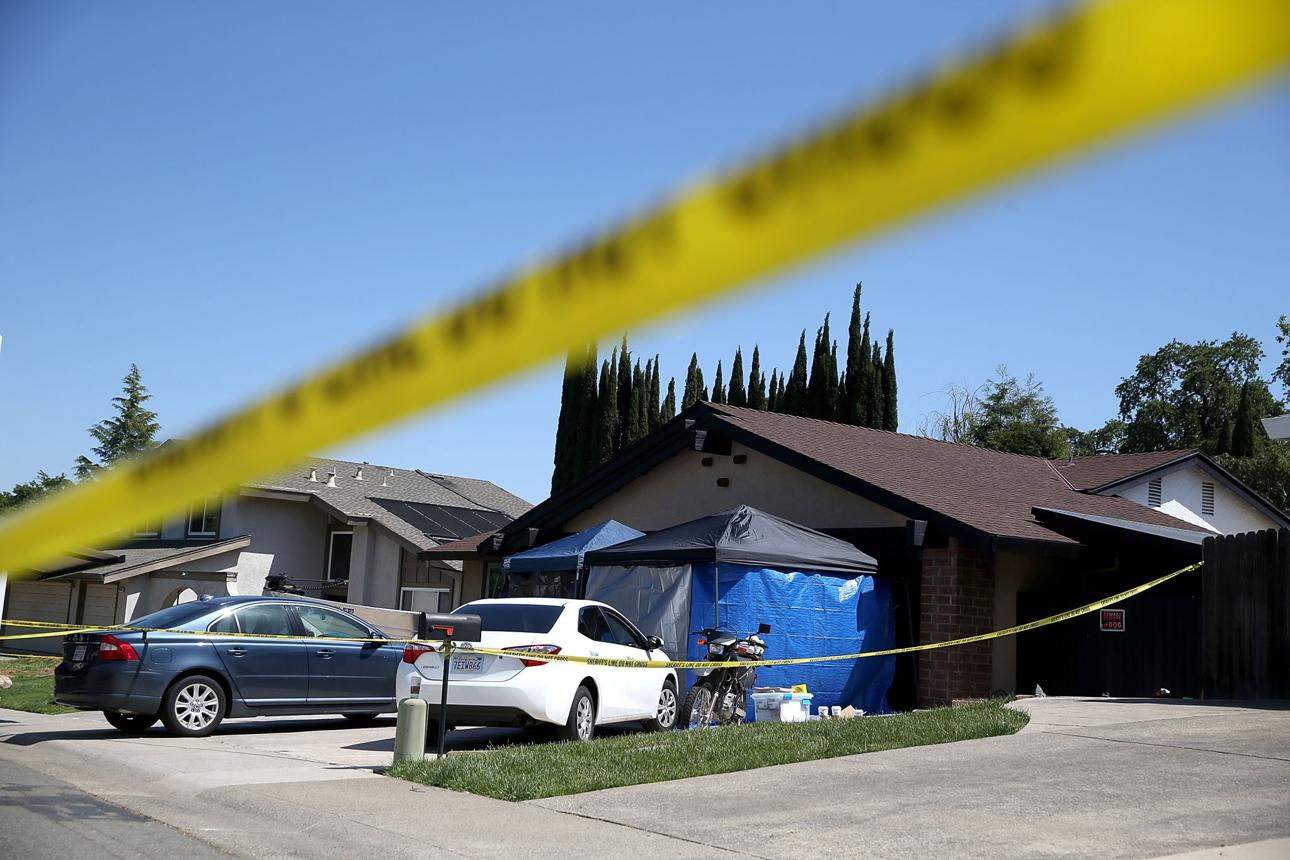
    In April 2018, officers arrested Joseph James DeAngelo outside his home.

    Neighbors were stunned.

    Many described him as ordinary.

    That realization shocked the public.

    The suspect had blended into everyday life for decades.

    He had worked regular jobs.

    He lived quietly.

    Yet investigators believed they had finally identified one of America’s most notorious serial offenders.

    News of the arrest spread across the country.

    For many families, it was the first moment they believed justice might finally arrive.


    Court Proceedings and Accountability

    The legal process that followed was emotional.

    Victims and family members spoke publicly.

    Many described decades of fear and unanswered questions.

    In 2020, DeAngelo admitted responsibility across numerous crimes.

    Statements from survivors became some of the most powerful moments in court.

    The sentencing brought closure for many families, even though nothing could undo the harm.

    The case became a landmark example of how forensic science and persistence can solve long-unsolved investigations.


    The Legacy of the Case

    The Golden State Killer investigation changed criminal investigations across the United States.

    Genetic genealogy became a powerful investigative tool.

    Cold cases received renewed attention.

    Police departments began reviewing evidence stored for decades.

    The case also reminded investigators that solving crimes sometimes requires patience measured not in days—but in generations.

    For victims’ families, the arrest represented something deeply human:

    the belief that answers can still arrive, even after many years.


    Final Thoughts

    The Golden State Killer case remains one of the most significant criminal investigations in American history.

    For more than forty years, investigators pursued leads, protected evidence, and refused to abandon the search.

    When science finally caught up with the case, one of America’s longest-running manhunts came to an end.

    Justice arrived slowly.

    But it arrived.

    Suggested Alt Text (for the 7 images)

    1. Composite sketch of the Golden State Killer used during investigation
    2. Quiet California neighborhood connected to the murder investigation
    3. Crime investigators reviewing evidence and case files
    4. Forensic laboratory performing DNA analysis
    5. Police arrest scene connected to the Golden State Killer case
    6. Courtroom illustration during sentencing proceedings
    7. Memorial candles honoring victims of the case
  • The Boy in the Box: How a Murder Mystery That Haunted America for 65 Years Was Finally Reopened—and Could Still Reveal More Secrets

    The Boy in the Box: How a Murder Mystery That Haunted America for 65 Years Was Finally Reopened—and Could Still Reveal More Secrets

    https://images.openai.com/static-rsc-4/BzIo8GlKebJ9gp3eTzFu2Jguvxn-VDImpvCqbiqqa0v1j6Qx_jONUwtGyTccbYnhf-DTguNhR_1jud1OhtfjkKjGuH4-OBOkSoOaFhYrt9vnnMiu7kT4ZueTme-PvSazndTnEGBVcv3komal8DQRYgxEv2VEMi5PR6ZG75vZW4UTozFh8mvgKa3O6pz_EsUx?purpose=fullsize

    Historical location where the Boy in the Box case was discovered in Philadelphia.

    https://images.openai.com/static-rsc-4/fnMMafkPZCZOzAcxzwa1EB-TcJcnSffuRh7ZGrx00yFuXsqW4908w9dD_O_HH1lM6f36CIHI9miohzqX8znM8JPOHZ3k2TpAsjZSSRP6PxuZpLNbvSDN1Gm93-hhukXF75LDg5QlKJzyYClAbsQf94qqHyfJmdWL72fsT5E9Uh9rly-d9M0XatU-cW-7_yDu?purpose=fullsize

    Detectives investigating one of America’s most famous child murder mysteries.

    https://images.openai.com/static-rsc-4/nxsnmJbXPI6OLXckTVFcTg73FWslVZidPs6ydf6aty7pbZYakHPtffPcRHdpsoaa_LTiKIsTJrDhjafBYwwFtkdiBbVhTOFTlfZFD7QKCcGv0frLLh6lOgc640FGEzkRrPcTWEpFJYZ3pOawBB9Ze7rGET6VVDArXJSOLSkHliv_aCcO6fsEUCiWRuq6nlUW?purpose=fullsize

    Cold-case investigators reviewing decades-old evidence files.

    https://images.openai.com/static-rsc-4/gXV0OucpxM4c7chmLMcx0R5ec_V-UHUA4GarBlhUcGXvVuJnOYeL6bkmhhRiBxKuvvZ-_reqrPLB64I7IDxtLSW8pAxO5ZZy0eXKWpKO3YBu0LNYBzUT7E2rZF57QAQGPBUBy4DPr7lYd3-lgW_0n1e3B_32xCVaSd2bpDdAU_OQ7wiii8bgD-EXJy4CUKPO?purpose=fullsize

    Modern forensic genealogy laboratory analyzing DNA samples.

    https://images.openai.com/static-rsc-4/r6zQBKn3zD76hZC_kVAIektPXHqJuhjWax3QYq9OkniTJIUykiWZmHio9hZBUabOf1s5s8UDvNskE6trdlgOhEt9Jk2ZoBCObn5_5B0gdUFLXPthapCOgpWXuR1Q9hSDZoiyekquWUuG5fAVvCFA47QN4Ad-C0U3iAWYVPIqVfo_GWD6Rdbvcd12mU-6UBBf?purpose=fullsize

    Newspaper coverage of the mysterious child murder case.

    https://images.openai.com/static-rsc-4/jlFzugTGQTg9o-rJJ0pj0jtS3FDH4tqO_Q7S38egVfNcgTfLOblbVZhnZEYTuyqqslyZsgM2yThz7XLA4IHBY33x7LqqQxLqRPU4hd8D89w0DmKKXs46zvvGnJdYxnR_7i31eCXvIf9ay5yaF_4t1LJUJ3e5a_zqyrpEY35xeeLZlo3Ln4tDbcMwU97VfVnd?purpose=fullsize

    Archived evidence preserved for future investigation.

      The Boy in the Box: How a Murder Mystery That Haunted America for 65 Years Was Finally Reopened—and Could Still Reveal More Secrets

      Some murder cases disappear from public memory after a few years. Others become legends, haunting generations of investigators and ordinary citizens alike. Few cold cases fit that description better than the mystery known as “The Boy in the Box.”

      For more than six decades, America searched for answers after the body of a young child was discovered abandoned in a cardboard box near Philadelphia. The victim had no identification, no known family, and no obvious clues pointing to his identity. Despite countless investigations, thousands of leads, and widespread media attention, the child remained a mystery.

      Yet unlike many cold cases, this story took an extraordinary turn. Advances in modern forensic science eventually allowed investigators to identify the victim decades after his death. Even today, however, many questions remain unanswered, and experts believe the murder investigation itself may still have more secrets waiting to be uncovered.

      A Chilling Discovery

      On February 25, 1957, a young man checking muskrat traps in a wooded area of Philadelphia, Pennsylvania, discovered a cardboard box lying near the roadside.

      Inside was the body of a small boy.

      The child appeared to be between four and six years old. Investigators immediately recognized that they were facing a tragic and disturbing homicide.

      The victim showed signs of severe abuse and neglect. There were visible injuries, indications of mistreatment, and evidence suggesting that his life had been extremely difficult long before his death.

      Police quickly launched an intensive investigation. What they did not realize was that the case would become one of the most famous unsolved murders in American history.

      The Search for an Identity

      One of the first goals of investigators was identifying the child.

      His fingerprints were taken and distributed nationwide. Photographs were shared with police departments across the country. Missing-child reports were reviewed. Newspapers published stories hoping someone would recognize him.

      No one came forward.

      Weeks turned into months. Months became years.

      Despite massive publicity, nobody could identify the victim.

      The mystery shocked investigators. How could a young child seemingly disappear without a trace? Why had no family member reported him missing? Why did no relative come looking for him?

      As public interest grew, the child became known simply as “The Boy in the Box.”

      Thousands of Leads—and No Answers

      The investigation generated enormous public attention.

      Police received thousands of tips from citizens claiming to know the child’s identity or the circumstances of his death. Detectives chased countless leads across multiple states.

      Several theories emerged.

      Some believed the child came from an orphanage. Others suspected illegal adoption networks. Some investigators explored the possibility that he had been hidden from society for years.

      One woman later claimed that the child had been purchased by her abusive mother and subjected to years of mistreatment before being killed. Her account contained details that appeared consistent with evidence from the scene.

      However, investigators could never fully verify her story.

      Without definitive proof, the case remained unsolved.

      Decades of Frustration

      As years passed, many feared the mystery would never be solved.

      The original detectives retired. Witnesses died. Evidence aged. Potential suspects disappeared.

      Yet something remarkable happened.

      The case never left public consciousness.

      True-crime researchers continued studying the evidence. Journalists revisited the mystery. Amateur investigators organized groups dedicated to finding answers.

      The child’s face appeared in documentaries, books, magazines, and television programs.

      Every few years, renewed interest sparked fresh attempts to identify him.

      Still, no breakthrough came.

      The Rise of Modern Forensics

      The late twentieth and early twenty-first centuries transformed criminal investigations.

      DNA testing became one of the most powerful tools in law enforcement history. Cases that had remained unsolved for decades suddenly became solvable.

      Investigators began reopening old evidence boxes from long-forgotten crimes.

      Cold cases across America were solved using technology that did not exist when the crimes occurred.

      The Boy in the Box case became a prime candidate for renewed forensic examination.

      Authorities carefully preserved evidence from the original investigation and began exploring whether modern scientific techniques could uncover the victim’s identity.

      A Historic Breakthrough

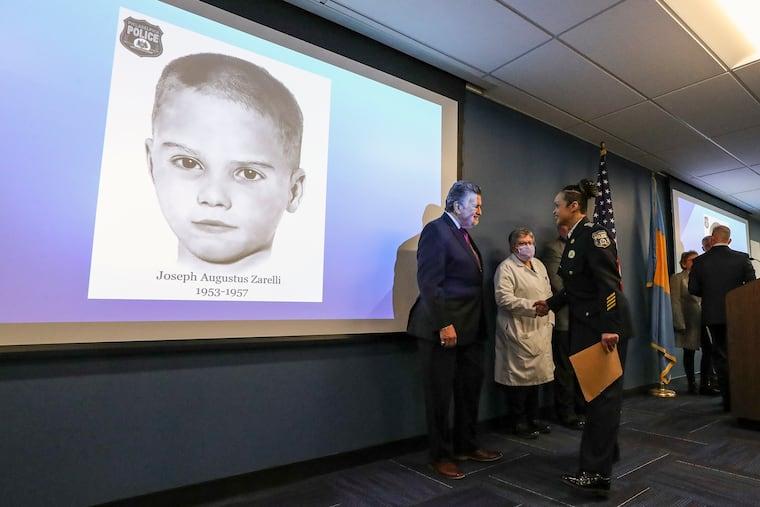
      In 2022, after more than 65 years, investigators finally achieved what many had thought impossible.

      Using advanced DNA analysis and forensic genealogy, authorities identified the child.

      His name was Joseph Augustus Zarelli.

      The announcement shocked both investigators and the public.

      For decades, Joseph had been known only as a mystery victim. Now he had a name, a birth certificate, and a place within a family history.

      The breakthrough demonstrated the extraordinary power of modern forensic science.

      What generations of detectives could not accomplish through traditional investigation methods was achieved through DNA technology and genealogical research.

      The identification represented one of the most significant cold-case breakthroughs in American criminal history.

      Why the Murder Case Is Still Not Fully Solved

      Although Joseph’s identity was finally established, many important questions remain unanswered.

      Who killed him?

      Who was responsible for the abuse he allegedly suffered?

      Were multiple people involved?

      Did individuals knowingly conceal information from investigators?

      Authorities have not publicly identified a killer. Many people connected to Joseph’s life are no longer alive, making the search for answers significantly more difficult.

      However, investigators have not closed the case.

      Modern detectives continue examining historical records, witness statements, family connections, and preserved evidence.

      The possibility remains that additional information could emerge.

      How Modern Technology Could Reveal More

      Today’s investigators possess tools unimaginable to detectives in 1957.

      Digital record databases allow researchers to cross-reference millions of historical documents within seconds.

      Artificial intelligence can assist in analyzing large collections of records and investigative files.

      Advanced DNA techniques continue evolving, enabling scientists to extract information from increasingly degraded biological samples.

      Forensic genealogy itself continues to improve each year.

      Evidence once considered useless may eventually yield new clues.

      In many cold cases, breakthroughs occur not because investigators discover entirely new evidence but because technology allows them to reinterpret evidence that already exists.

      The Boy in the Box investigation may benefit from exactly this process.

      Why Cold Cases Matter

      Some people wonder why authorities continue investigating crimes committed decades ago.

      The answer is simple.

      Justice has no expiration date.

      Every victim deserves to be identified. Every family deserves answers. Every unsolved homicide represents unfinished business for investigators and communities alike.

      Cold-case investigations also provide valuable lessons for modern law enforcement. They reveal investigative mistakes, highlight advances in forensic science, and demonstrate the importance of preserving evidence.

      Most importantly, they remind society that victims should never be forgotten.

      The Legacy of Joseph Augustus Zarelli

      For generations, the child found in a cardboard box symbolized one of America’s greatest criminal mysteries.

      Today, Joseph Augustus Zarelli is no longer anonymous.

      His name has been restored. His story is known. His existence is acknowledged.

      Yet the investigation continues.

      Detectives still hope that surviving records, family histories, witness accounts, or future technological advances may provide additional answers about what happened during the final days of his life.

      The case stands as a powerful example of why cold cases should never be abandoned.

      A mystery that seemed impossible to solve for 65 years eventually yielded one of its biggest secrets. That success offers hope that other historic murder investigations may one day reach similar breakthroughs.

      The Boy in the Box may finally have a name, but the search for complete justice is not over. As forensic science continues advancing, investigators remain determined to uncover every possible truth hidden within this tragic chapter of American history.