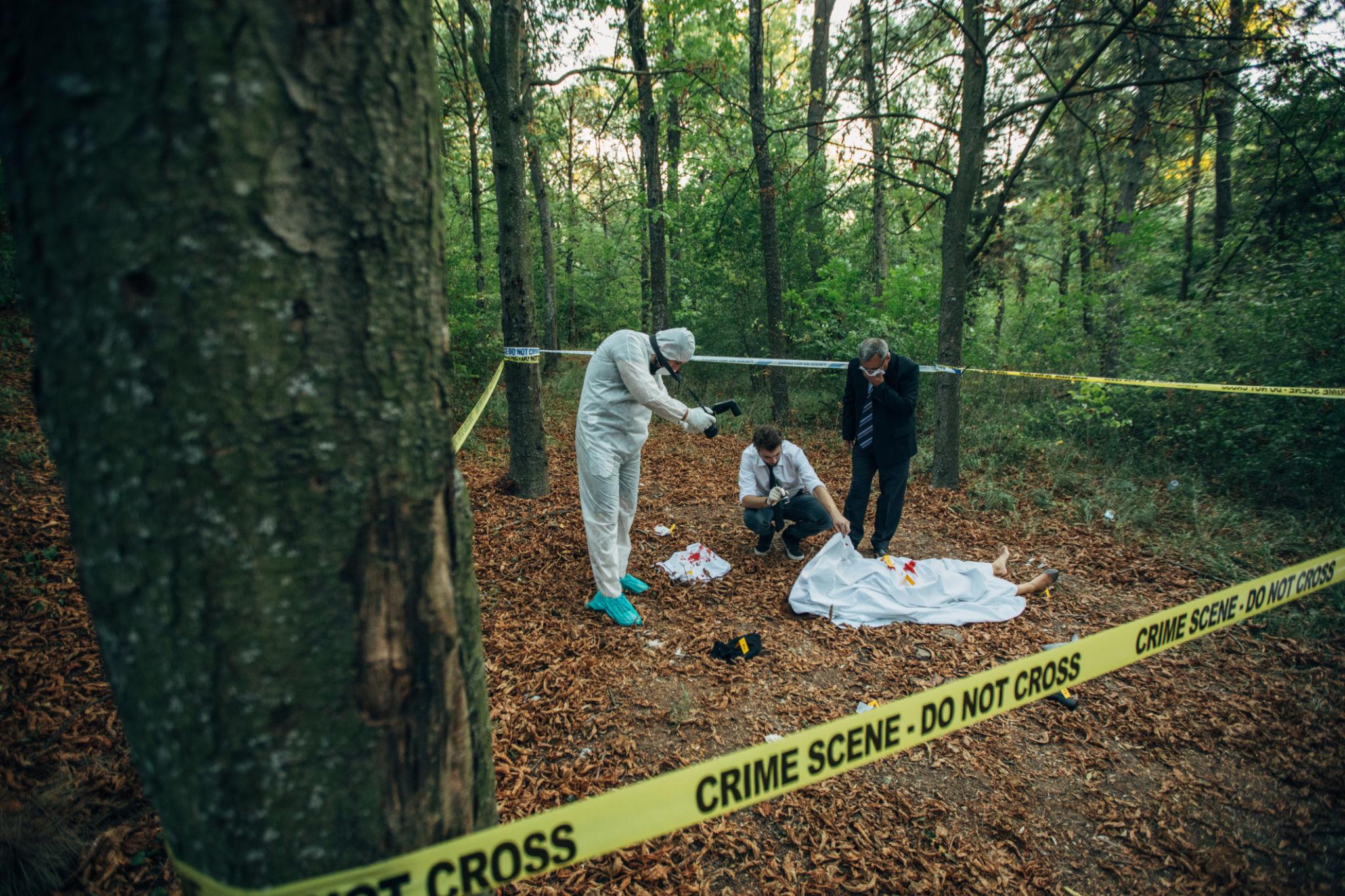


Buried for Decades, Forgotten by Time — Until Modern Science Solved the Bear Brook Murders
For years, nobody knew their names.
Hidden in the woods and separated from the outside world, the victims remained unidentified while investigators searched for answers that never seemed to come.
The evidence existed.
The crime scene existed.
But the identities—and the killer—appeared lost forever.
Then decades later, technology advanced.
Old evidence was reopened.
And one of America’s most haunting murder mysteries finally began to reveal its secrets.
This is the real story of the Bear Brook Murders.
A Discovery Hidden Deep in the Woods
In 1985, a hunter exploring a wooded area near Bear Brook State Park in New Hampshire made a disturbing discovery.
Inside a metal barrel were human remains.
Authorities quickly arrived and confirmed a shocking scene: two victims had been concealed and abandoned in the forest.
Investigators worked to identify them.
But there were problems.
No clear missing person reports matched.
Technology available at the time was limited.
There were no mobile phones, digital records, or advanced DNA systems available to compare identities at scale.
Investigators collected evidence carefully and preserved everything possible.
Still, years passed without answers.
The case slowly became one of New Hampshire’s most troubling unsolved mysteries.
Another Discovery That Changed Everything
Fifteen years later, investigators returned to the same area.
What they found transformed the case.
In 2000, another barrel was discovered not far from the first location.
Inside were additional human remains.
Suddenly, authorities realized the original case was even larger and more complicated than anyone had imagined.
The victims appeared connected.
Investigators suspected all the deaths may have occurred years earlier.
Yet nobody knew who these people were.
Without identities, finding a killer became extremely difficult.
The case turned cold again.
The Problem With Historic Investigations
Cold cases often face the same obstacles:
- Witnesses move away
- Physical evidence degrades
- Memories become unreliable
- Investigators retire
- Records become harder to trace
Many historic murder investigations stall not because evidence disappears—but because technology has not yet caught up.
The Bear Brook case became a painful example of that reality.
Authorities continued revisiting evidence over the years, hoping future advances would create new opportunities.
Eventually, those advances arrived.
DNA Changes the Direction of the Case
By the 2010s, forensic DNA analysis had improved dramatically.
Scientists could extract more information from older evidence.
Investigators reopened the Bear Brook case and began using newer identification methods.
But traditional database searches still produced limited results.
So investigators explored another approach.
Genetic genealogy.
Instead of searching directly for a suspect, specialists searched for distant family relationships.
Small biological connections began building family trees.
Those family trees slowly pointed investigators toward identities.
This process required years of verification and cooperation across jurisdictions.
Eventually, victims who had remained unknown for decades finally began receiving names.
That alone was a major breakthrough.
But identifying victims also opened the path toward identifying the killer.
A Man Living Under Different Identities
As investigators connected evidence, attention turned toward a man known by multiple identities over the years.
Authorities linked the case to Terry Rasmussen.
Rasmussen had reportedly lived under aliases and moved across different states.
This complicated earlier investigations because records appeared fragmented and disconnected.
Investigators gradually connected missing persons reports, timelines, and forensic evidence.
The emerging picture suggested years of deception.
People connected to Rasmussen reportedly knew different versions of who he claimed to be.
That made tracing movements extremely difficult.
But modern investigative methods allowed authorities to reconstruct historical records in ways impossible decades earlier.
Naming the Victims
One of the most emotional parts of the investigation was not identifying the suspect.
It was identifying the victims.
For decades, families had lived without answers.
Some relatives never knew where loved ones disappeared.
Others had filed reports years earlier without resolution.
As identifications progressed, investigators worked to notify surviving family members.
Names replaced labels.
People replaced case numbers.
The investigation became more than solving a mystery—it became restoring identity.
Why This Case Changed Cold Case Investigations
The Bear Brook Murders became nationally recognized because they demonstrated something important:
Cold cases are not frozen forever.
Evidence preserved decades earlier may become useful again.
Modern investigation techniques now include:
- Advanced forensic DNA analysis
- Digital archival searches
- Genetic genealogy
- Geographic reconstruction
- Cross-state information sharing
Cases once considered impossible sometimes become solvable.
Investigators around the world continue reopening historic cases using these approaches.
The Ethical Questions Behind Modern DNA Investigations
Success also created new discussions.
Genetic genealogy raises important questions:
How should personal genetic information be used?
What protections should exist?
What limits should investigators follow?
These conversations continue as forensic science becomes more powerful.
Supporters argue the methods help deliver justice.
Others emphasize the importance of privacy safeguards.
The Bear Brook case became part of that broader discussion.
Justice and Time
Some people believe justice disappears after enough years pass.
But cases like Bear Brook suggest something different.
Time changes investigations.
It does not always erase them.
Evidence stored in archives, old reports, preserved biological samples, and modern technology can sometimes reconnect events that once seemed impossible to solve.
For families, answers decades later cannot replace lost time.
But they can provide something many thought impossible:
Truth.
And sometimes, truth arrives long after silence.
Final Thoughts
The Bear Brook Murders remain one of the clearest examples that historic crimes can still move forward.
Decades separated investigators from the original events.
Technology changed.
Methods evolved.
Yet evidence remained.
The lesson from this case is simple:
A cold case is not necessarily a closed case.
Sometimes the answer waits quietly for the future to catch up.
Suggested Image Alt Text (6–7 Images)
- Forest landscape associated with historic cold case investigations
- Investigators examining archived evidence in a reopened murder case
- Metal evidence containers representing long-term forensic storage
- Forensic DNA laboratory processing historic evidence samples
- Detectives reviewing decades-old missing person records
- Genetic genealogy analysis helping solve historic crimes
- Symbolic image representing justice after many years
SEO Title:
The Murder Mystery That Stayed Hidden for Decades — Until DNA Finally Revealed the Truth
Meta Description:
Explore the true story of the Bear Brook Murders, a historic cold case that remained unsolved for decades before forensic science and DNA technology uncovered the truth.
Leave a Reply