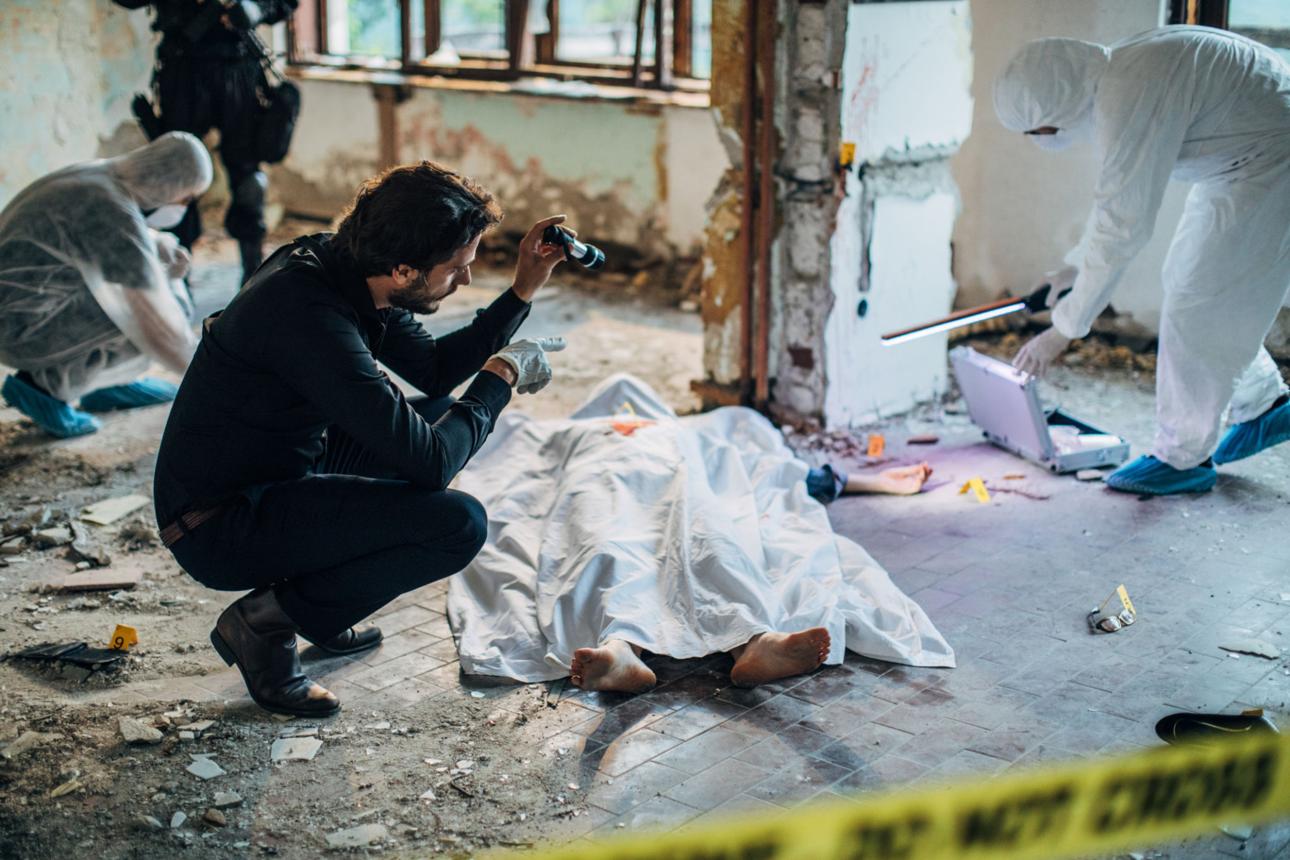
The Killer Believed 44 Years Had Erased His Crime—Then Detectives Reopened One Forgotten File


The Killer Believed 44 Years Had Erased His Crime—Then Detectives Reopened One Forgotten File
For more than four decades, the murder remained a mystery.
The victim’s family waited for answers that never came. Detectives retired. Witnesses moved away. Newspaper headlines disappeared.
Most people assumed the killer had gotten away with murder.
Time seemed to be on his side.
But hidden inside a police evidence room sat several boxes containing reports, photographs, and forensic samples collected many years earlier.
What nobody realized was that the most important witness in the entire case had never spoken.
It was a tiny piece of DNA.
Forty-four years after the crime, that evidence would finally reveal the truth.
And when it did, an entire community was stunned.
A Young Woman Vanishes
In September 1978, a 24-year-old woman finished her evening shift at a local restaurant and started driving home.
Friends described her as responsible and dependable.
When she failed to arrive home that night, her family became worried almost immediately.
Calls to friends produced no answers.
Hospitals reported no accidents involving her vehicle.
By the following morning, a missing-person investigation had begun.
Police officers searched roads and parking lots.
Volunteers distributed flyers.
Local radio stations broadcast appeals for information.
Residents hoped she would be found safe.
Instead, several days later, searchers discovered her abandoned vehicle.
The discovery increased fears that something terrible had happened.
A large-scale search operation was organized.
Then came the devastating news.
The young woman’s body was found in a wooded area several miles from town.
Investigators determined she had been murdered.
The community was shocked.
Violent crimes were rare in the area, and many residents struggled to understand how such a tragedy could occur.
Fear spread rapidly.
Parents warned children not to walk alone.
Businesses adjusted operating hours.
For months, the crime dominated local conversations.
The Search for Answers
Police immediately launched a major homicide investigation.
Detectives interviewed hundreds of people.
Coworkers, neighbors, former classmates, and family members were questioned.
Potential suspects were identified and investigated.
Every lead was pursued.
Crime-scene investigators collected everything they could find.
Photographs were taken.
Fibers were gathered.
Tire tracks were documented.
Biological evidence was carefully preserved.
At the time, detectives believed the evidence would eventually lead them to the killer.
Unfortunately, forensic technology in 1978 was far less advanced than today.
DNA testing did not exist.
Many scientific techniques now considered routine had not yet been developed.
Investigators relied primarily on witness testimony and traditional detective work.
Months passed without a breakthrough.
Eventually, the investigation stalled.
A Family’s Long Wait
For the victim’s family, life never returned to normal.
Birthdays became painful reminders.
Holiday gatherings felt incomplete.
Every year brought the same unanswered question:
Who killed her?
The family maintained regular contact with investigators.
Whenever a new detective took over the case, they hoped fresh eyes might uncover something previously overlooked.
Occasionally, tips arrived.
Some appeared promising.
None resulted in an arrest.
As the years passed, the case officially became a cold case.
Yet the family never gave up hope.
Neither did some investigators.
Evidence Preserved for the Future
One of the most important decisions made during the original investigation involved evidence preservation.
Instead of discarding items that seemed unhelpful, detectives carefully stored everything.
Boxes of documents were archived.
Photographs were protected.
Biological samples were sealed and preserved.
At the time, nobody knew how important those decisions would become.
Investigators simply believed future technologies might offer new opportunities.
They were right.
A New Generation of Detectives
By 2022, cold-case units across the United States were solving crimes that had remained mysteries for decades.
Advances in forensic science had transformed criminal investigations.
Cases once considered impossible were suddenly being solved.
A newly assigned detective reviewed the 1978 murder file.
The investigation immediately caught his attention.
Several pieces of biological evidence collected from the original crime scene appeared suitable for modern DNA testing.
The evidence was submitted to a specialized forensic laboratory.
Weeks later, investigators received exciting news.
Scientists had successfully recovered a DNA profile.
For the first time, detectives possessed genetic evidence linked directly to the killer.
The First Major Breakthrough
The DNA profile was entered into national law-enforcement databases.
Investigators hoped the suspect had previously been arrested for another crime.
A match would immediately identify the killer.
No match appeared.
The suspect was not in the system.
At first, the discovery seemed disappointing.
But detectives understood that modern investigations had another powerful tool available.
Forensic genealogy.
The same technology responsible for solving numerous cold cases across the country could potentially help identify their suspect.
The investigation moved into a new phase.
Building a Family Tree
Forensic genealogy combines DNA science with traditional ancestry research.
Rather than searching directly for the suspect, investigators search for relatives who share portions of the same genetic profile.
Genealogists began examining records.
Marriage certificates.
Birth records.
Obituaries.
Census documents.
Military records.
Thousands of names were reviewed.
The process required months of patience.
Family trees expanded across multiple generations.
Branches were eliminated one by one.
Eventually, investigators narrowed their search to a small group of individuals.
One name stood out.
The Man Nobody Remembered
The suspect had lived in the area in 1978.
Yet he had never become a major focus of the original investigation.
His name appeared only briefly within old police records.
At the time, there was no evidence connecting him to the murder.
Now everything looked different.
Investigators examined employment records.
They reviewed historical addresses.
Old witness statements were reanalyzed.
Several details suddenly became significant.
The suspect’s movements matched important events in the investigation.
Locations connected to him aligned with evidence recovered decades earlier.
The case against him continued growing stronger.
Still, detectives needed one final piece of proof.
Obtaining Confirmation
Investigators quietly monitored the suspect.
Their goal was obtaining a direct DNA sample.
Eventually, they recovered an item discarded in a public place.
The object was submitted for forensic analysis.
Scientists extracted DNA and compared it with the profile recovered from the original crime-scene evidence.
The results were definitive.
The samples matched.
After forty-four years, investigators finally knew who had committed the murder.
The revelation shocked everyone involved.
A mystery that had survived nearly half a century suddenly had an answer.
The Arrest
Police officers arrived at the suspect’s residence early one morning.
He was taken into custody without incident.
News of the arrest spread rapidly throughout the community.
Television stations covered the story extensively.
Former investigators expressed amazement.
Residents who remembered the original crime could hardly believe the case had finally been solved.
For the victim’s family, emotions were overwhelming.
Some cried.
Others expressed gratitude.
Many described feeling relief for the first time in decades.
The person responsible would finally face justice.
The Trial
The courtroom was filled during the trial.
Journalists, family members, and members of the public attended proceedings.
Prosecutors presented a detailed timeline of the investigation.
DNA experts explained how modern technology made identification possible.
Genealogists described the research that connected the suspect to the crime.
Detectives outlined every step taken during the renewed investigation.
The defense challenged aspects of the case.
However, the scientific evidence proved compelling.
Jurors listened carefully.
They reviewed decades of evidence and testimony.
After deliberating, they reached a verdict.
The suspect was found guilty.
At last, justice had arrived.
Why Cold Cases Are Being Solved Today
Cases like this are becoming increasingly common.
Across the country, law-enforcement agencies are revisiting unsolved homicides from previous decades.
Modern DNA testing can recover information from extremely small biological samples.
Evidence once considered useless can now reveal critical clues.
Forensic genealogy has revolutionized investigations by identifying suspects through distant relatives.
As a result, criminals who believed they escaped justice are being identified years later.
Thousands of cold cases remain open.
Many contain evidence that has never been examined using today’s technology.
Investigators believe countless additional breakthroughs are still waiting to happen.
A Lesson About Time and Justice
The most remarkable aspect of this story is that the solution existed from the beginning.
The evidence was collected in 1978.
It was carefully preserved.
What investigators lacked was the technology needed to interpret it.
For decades, the killer believed time would protect him.
He watched years pass.
He watched public attention disappear.
He assumed the case had been forgotten.
But evidence has a remarkable memory.
A tiny biological sample waited patiently inside an evidence box.
Science advanced.
Detectives kept searching.
Eventually, the truth emerged.
Hope for Other Families
Thousands of families continue waiting for answers in unsolved murder investigations.
Many have spent decades wondering whether justice will ever arrive.
Stories like this provide hope.
Every preserved piece of evidence represents possibility.
Every scientific advancement creates opportunity.
Every detective who reopens an old file increases the chance that a mystery can be solved.
For this family, the wait lasted forty-four years.
For others, it may be longer.
But modern forensic science continues proving an important truth:
A murder case is never truly over until every lead has been exhausted.
And sometimes, even after decades have passed, the evidence is still waiting to tell its story.
Additional Article Images
Image 1 – Missing Person Search


Alt Text: Volunteers and police searching for a missing woman shortly after her disappearance.
Image 2 – Crime Scene Investigation


Alt Text: Detectives processing a homicide scene during the original investigation.
Image 3 – Cold Case Files


Alt Text: Archived homicide evidence preserved for decades.
Image 4 – DNA Laboratory


Alt Text: Scientists analyzing decades-old evidence using modern DNA technology.
Image 5 – Genealogy Research


Alt Text: Researchers tracing family connections through forensic genealogy.
Image 6 – Arrest After Decades


Alt Text: Police arresting a suspect more than four decades after the murder.
Image 7 – Courthouse Verdict


Alt Text: Courthouse where justice was finally served after 44 years.
Leave a Reply