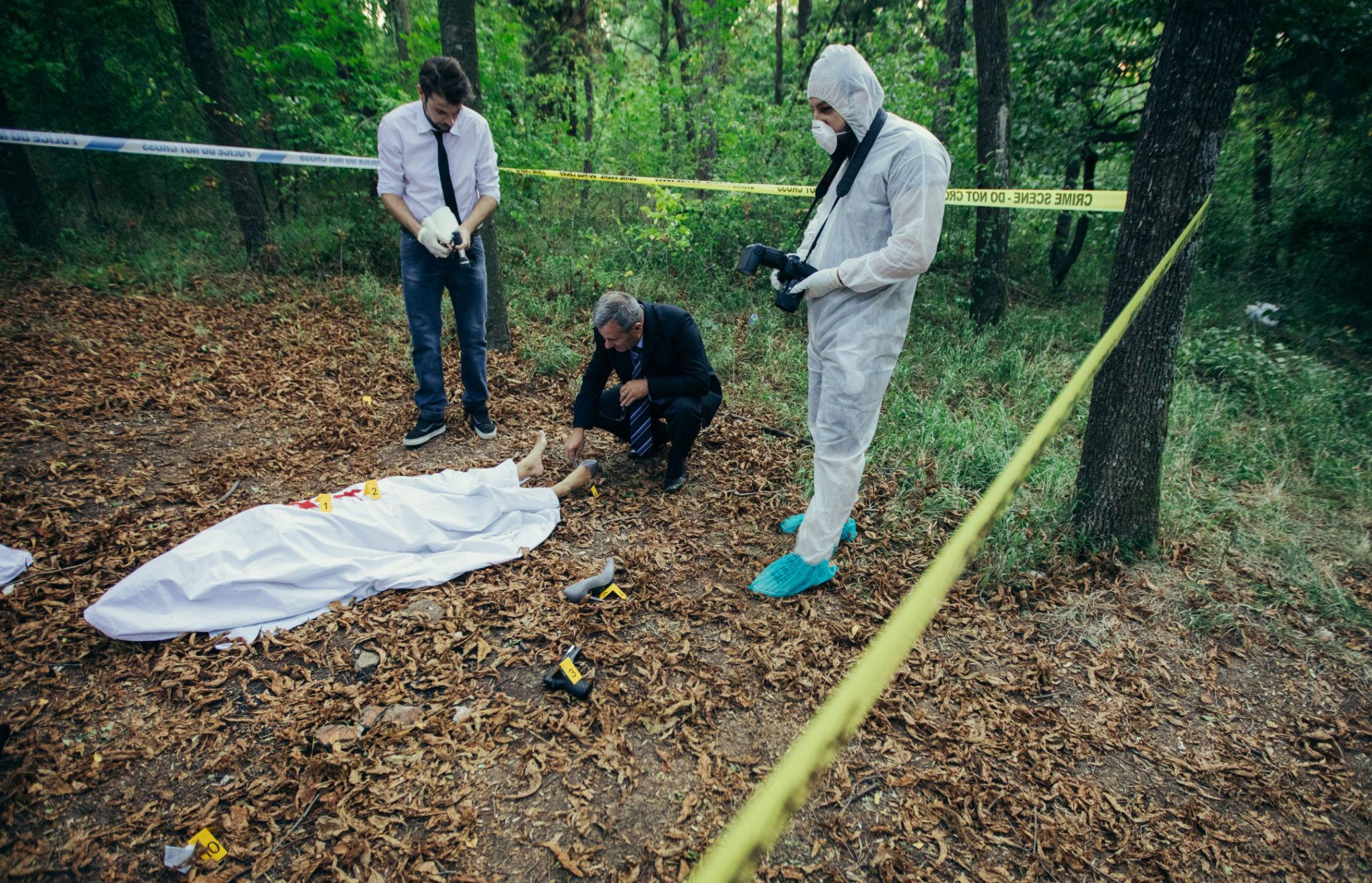


She Was Murdered in 1972. For 51 Years, Nobody Knew Who Did It—Until a Tiny DNA Sample Finally Exposed the Killer
Some murder cases disappear from the headlines within days.
Others refuse to be forgotten.
This is the story of a homicide that remained unsolved for more than half a century—a case that haunted investigators, devastated a family, and left a community searching for answers.
For 51 years, the identity of the killer remained a mystery.
Witnesses came and went.
Detectives retired.
Leads dried up.
Yet one tiny piece of evidence survived.
Locked away inside a police evidence room, it waited for science to catch up.
When that moment finally arrived, one of the longest-running mysteries in local history was finally solved.
A Normal Day That Ended in Tragedy
In the summer of 1972, a 23-year-old woman finished work and headed home.
Friends later described her as kind, hardworking, and well-liked throughout the community.
Nothing about that day appeared unusual.
She followed her normal routine.
She planned to meet family members later that evening.
But she never arrived.
When relatives were unable to contact her, concern quickly spread.
At first, family members believed she may have experienced car trouble or decided to visit friends unexpectedly.
As the hours passed, that explanation became less believable.
Police received a missing-person report and immediately began searching.
Volunteers joined the effort.
Local newspapers printed photographs.
Community members searched roads, fields, and wooded areas.
Days later, the search ended with a devastating discovery.
The young woman’s body was found in a remote area several miles from town.
Investigators quickly determined she had been murdered.
The crime shocked residents.
Many had never experienced such violence within their community.
Fear replaced normal life almost overnight.
The Investigation Begins
Detectives launched an extensive homicide investigation.
Hundreds of interviews were conducted.
Friends, coworkers, neighbors, and relatives were questioned.
Police received countless tips.
Some witnesses reported suspicious vehicles.
Others described unfamiliar individuals seen near the area.
Every lead was investigated.
At the crime scene, detectives collected all available evidence.
Among the materials recovered were fibers, fingerprints, tire impressions, and biological samples.
Investigators hoped these clues would eventually identify the killer.
Unfortunately, forensic science in 1972 had significant limitations.
DNA testing did not exist.
Many of today’s investigative technologies had not yet been developed.
Although detectives worked tirelessly, the case remained unsolved.
Months Become Years
As months passed, investigators continued searching for answers.
New suspects emerged.
Old suspects were eliminated.
Several individuals were questioned repeatedly.
Yet none could be connected conclusively to the crime.
Eventually, the investigation slowed.
The case entered what law enforcement calls “cold case” status.
A cold case does not mean an investigation has ended.
It simply means active leads have been exhausted.
For the victim’s family, however, the distinction offered little comfort.
Birthdays came and went.
Holidays passed.
Anniversaries became painful reminders of unanswered questions.
Who committed the murder?
Would justice ever arrive?
The Evidence Is Preserved
One decision made during the original investigation would later prove critical.
Instead of discarding evidence that appeared unhelpful, detectives carefully preserved everything.
Boxes containing reports, photographs, witness statements, and forensic samples were placed into storage.
At the time, nobody could predict future scientific advancements.
Yet investigators understood that technology evolves.
Perhaps one day new tools would reveal information unavailable in 1972.
That decision ultimately changed everything.
A New Generation Takes Over
More than five decades later, a newly established cold-case unit reviewed unsolved homicides from previous decades.
The 1972 murder quickly attracted attention.
Advances in forensic science had transformed criminal investigations across the country.
Cases once considered impossible were suddenly being solved.
Investigators began examining old evidence.
Thousands of pages of reports were digitized.
Witness statements were reanalyzed.
Crime-scene photographs were enhanced using modern technology.
Most importantly, preserved biological evidence was submitted for advanced DNA testing.
The results exceeded expectations.
Science Unlocks a Secret
Forensic scientists successfully extracted a DNA profile from evidence collected in 1972.
The breakthrough represented a historic moment for the investigation.
For the first time, detectives possessed a genetic signature connected to the killer.
The DNA profile was entered into national law-enforcement databases.
Investigators hoped the suspect’s identity would immediately appear.
No match was found.
The disappointment was significant.
However, detectives now had another powerful tool at their disposal.
Forensic genealogy.
A Revolutionary Technique
Forensic genealogy combines genetic science with traditional family-history research.
Instead of searching directly for a suspect, investigators search for relatives who share portions of the same DNA.
Even distant relatives can provide valuable clues.
Genealogists joined the investigation.
Months of research followed.
Birth records were reviewed.
Marriage certificates were examined.
Obituaries were analyzed.
Historical census records provided additional information.
Family trees expanded across multiple generations.
Thousands of individuals were evaluated.
Slowly, investigators narrowed their search.
Eventually, they identified a specific family line connected to the unknown DNA profile.
One individual quickly emerged as a strong suspect.
The Man Nobody Suspected
The suspect had lived near the victim during the early 1970s.
Surprisingly, he had never been considered a major suspect.
His name appeared only briefly within original investigative records.
At the time, detectives lacked evidence linking him to the crime.
The DNA findings changed everything.
Investigators examined his history.
Employment records placed him near relevant locations.
Witness statements that once seemed insignificant suddenly gained importance.
Several previously overlooked details aligned perfectly with the timeline of the murder.
The case against him grew stronger.
Yet detectives still required definitive proof.
Gathering Confirmation
Investigators quietly monitored the suspect.
Their goal was obtaining a direct DNA sample without alerting him.
Eventually, detectives recovered an item discarded in a public location.
The object was sent to a forensic laboratory.
Scientists extracted DNA and compared it with the profile recovered from the crime-scene evidence.
The results were conclusive.
The DNA matched.
After 51 years, investigators finally identified the killer.
The case that had remained unsolved for more than half a century suddenly had an answer.
The Arrest
Police officers executed an arrest warrant early one morning.
The suspect, now elderly, was taken into custody.
News of the arrest spread rapidly.
Television stations interrupted programming.
Newspapers published special reports.
Many residents could not believe the case had finally been solved.
Some had followed the investigation for decades.
Others had assumed justice would never arrive.
For the victim’s family, emotions were overwhelming.
Relief mixed with sadness.
Closure mixed with grief.
The years lost could never be recovered.
But the truth had finally emerged.
Inside the Courtroom
The trial attracted significant public attention.
Prosecutors presented extensive forensic evidence.
DNA experts explained how technology had evolved since 1972.
Genealogists described the family-tree research that led investigators to the suspect.
Detectives outlined every step of the modern investigation.
The defense challenged portions of the evidence.
However, the DNA findings proved difficult to dispute.
Jurors listened as decades of mystery unfolded before them.
The evidence painted a clear picture.
After deliberation, the jury reached its verdict.
The suspect was found guilty.
Justice had finally arrived.
Why Cold Cases Are Being Solved More Often
Cases like this are becoming increasingly common.
Across the United States, cold-case units are reopening investigations once considered impossible to solve.
Modern DNA analysis can recover information from evidence collected decades ago.
Forensic genealogy has created entirely new investigative pathways.
Even small biological samples can now reveal valuable clues.
As technology continues improving, experts believe thousands of additional cold cases may eventually be solved.
Evidence once thought useless is becoming more valuable every year.
The Lesson Hidden Inside an Evidence Box
Perhaps the most remarkable aspect of this story is that the solution existed from the beginning.
The evidence was collected in 1972.
Investigators preserved it carefully.
What they lacked was the technology necessary to unlock its secrets.
For decades, the killer believed time would protect him.
He watched investigators retire.
He watched headlines disappear.
He assumed the case had been forgotten.
He was wrong.
The evidence waited patiently.
Science advanced.
Investigators continued searching.
Eventually, the truth emerged.
A Message for Families Still Waiting
Thousands of families across the country continue waiting for answers in unsolved homicide cases.
Many have spent decades hoping for a breakthrough.
Stories like this provide something extremely important.
Hope.
Every preserved piece of evidence represents a possibility.
Every technological advancement creates new opportunities.
Every cold-case detective who reopens an old file increases the chance that justice will eventually arrive.
For this victim’s family, that moment came after 51 long years.
The killer believed he had escaped forever.
Instead, a tiny DNA sample became the witness that finally spoke.
And when it did, it changed everything.
The case serves as a powerful reminder that justice may move slowly, but it can still arrive—even after half a century has passed.
Additional Images for the Article
Image 1 – Missing Person Search


Alt Text: Volunteers and police searching for clues after a young woman disappeared.
Image 2 – Crime Scene Investigation


Alt Text: Detectives collecting evidence from the original homicide scene.
Image 3 – Cold Case Archives


Alt Text: Decades-old murder evidence preserved inside a police archive.
Image 4 – DNA Laboratory


Alt Text: Scientists using advanced DNA technology to analyze evidence.
Image 5 – Genealogy Investigation


Alt Text: Forensic genealogists tracing family connections through DNA.
Image 6 – Arrest of the Suspect


Alt Text: Police arresting a suspect more than 50 years after the murder.
Image 7 – Courthouse and Verdict


Alt Text: Courthouse where the decades-old murder case finally reached justice.
Leave a Reply