Tag: Real Stories

  • She Vanished in 1975. Nearly 50 Years Later, One DNA Breakthrough Finally Revealed Her Killer

    She Vanished in 1975. Nearly 50 Years Later, One DNA Breakthrough Finally Revealed Her Killer

    She Vanished in 1975. Nearly 50 Years Later, One DNA Breakthrough Finally Revealed Her Killer

    Image
    Image
    Image
    Image
    Image
    Image
    Image

    She Vanished in 1975. Nearly 50 Years Later, One DNA Breakthrough Finally Revealed Her Killer

    For decades, the mystery haunted investigators.

    The victim’s family waited year after year for answers that never came. Detectives chased leads that went nowhere. Witnesses moved away, memories faded, and the case slowly disappeared from public attention.

    Yet one thing remained.

    The evidence.

    Stored inside a police archive for nearly half a century, a small collection of clues quietly survived while technology advanced around it.

    What investigators could not solve in 1975 would eventually be solved decades later.

    And when the truth finally emerged, it shocked everyone.

    A Disappearance That Alarmed a Small Community

    In the autumn of 1975, a 22-year-old woman left her workplace and headed home.

    She never arrived.

    When she failed to contact her family, concern quickly spread.

    Friends called local hospitals.

    Relatives contacted police.

    Officers initially believed she might have experienced car trouble or chosen to stay with friends.

    But as hours turned into days, the situation became increasingly serious.

    A large search effort was organized.

    Volunteers searched roads, wooded areas, fields, and abandoned properties.

    Flyers appeared throughout the community.

    Local newspapers published her photograph on their front pages.

    Everyone hoped she would be found alive.

    Instead, searchers made a devastating discovery several days later.

    Her body was found in a remote area miles from where she had last been seen.

    Investigators immediately recognized that they were dealing with a homicide.

    The crime shocked residents and transformed a peaceful town into a community living with fear.

    The Early Investigation

    Police launched one of the largest investigations in local history.

    Detectives interviewed coworkers, relatives, neighbors, former classmates, and anyone who might have encountered the victim before her disappearance.

    Hundreds of leads poured in.

    Some witnesses reported suspicious vehicles.

    Others claimed to have seen unfamiliar individuals near the area where the victim disappeared.

    Investigators carefully collected evidence from the crime scene.

    They recovered fibers, fingerprints, tire impressions, and several biological samples.

    At the time, detectives believed the evidence might eventually identify the killer.

    Unfortunately, forensic science in 1975 was extremely limited.

    DNA testing did not yet exist.

    Many forms of forensic analysis available today were decades away from development.

    Despite months of work, detectives failed to identify a suspect.

    The case gradually lost momentum.

    The Years Turn Into Decades

    The victim’s family refused to give up.

    Every birthday, every holiday, and every anniversary reminded them of the unanswered questions.

    Who was responsible?

    Why had the crime happened?

    Would justice ever arrive?

    Investigators occasionally reviewed the case.

    New detectives examined old files.

    Tips continued to arrive.

    Yet nothing produced a breakthrough.

    The homicide officially became a cold case.

    To the public, the murder appeared destined to remain unsolved forever.

    Inside police storage, however, the evidence remained preserved.

    And that evidence still had a story to tell.

    A New Generation of Detectives

    Nearly fifty years later, a cold-case unit began reviewing unsolved murders from the 1970s.

    The victim’s case quickly attracted attention.

    Advances in forensic science had transformed criminal investigations.

    Evidence once considered useless could now provide valuable information.

    Detectives carefully examined every piece of preserved material.

    Among the items collected in 1975 were biological samples that had never undergone modern DNA analysis.

    Laboratory experts believed the evidence might still contain usable genetic material.

    The samples were sent for testing.

    Investigators hoped for a breakthrough.

    What happened next exceeded all expectations.

    Science Unlocks a Secret

    Forensic scientists successfully extracted a complete DNA profile from evidence recovered at the original crime scene.

    The achievement represented a major milestone.

    For the first time in nearly five decades, investigators possessed a genetic profile linked directly to the killer.

    The DNA was entered into criminal databases.

    Detectives waited anxiously for results.

    No match appeared.

    The suspect had apparently never been required to provide DNA to law enforcement.

    At first, the discovery seemed disappointing.

    But detectives had another option.

    One that did not exist even a decade earlier.

    The Power of Forensic Genealogy

    Forensic genealogy has revolutionized cold-case investigations.

    Rather than searching directly for the suspect, investigators search for relatives who share portions of the same DNA.

    Genealogists joined the investigation and began building an enormous family tree.

    The process required months of research.

    Birth records were reviewed.

    Marriage certificates were analyzed.

    Historical census records were examined.

    Obituaries provided additional clues.

    Thousands of names were considered.

    Gradually, investigators narrowed the possibilities.

    Eventually, they identified a family line connected to the unknown DNA profile.

    One individual quickly became the focus of the investigation.

    The Suspect Nobody Expected

    The suspect had lived in the region during the mid-1970s.

    Remarkably, he had never been a major suspect during the original investigation.

    His name appeared only briefly within old reports.

    At the time, detectives lacked evidence connecting him to the crime.

    Now everything looked different.

    Investigators reviewed his background.

    Employment records placed him near locations relevant to the investigation.

    Witness statements that once seemed insignificant suddenly gained importance.

    Old timelines began matching up.

    The more detectives learned, the stronger the case became.

    Yet they still needed direct proof.

    The Evidence Speaks

    Detectives quietly monitored the suspect.

    Eventually, investigators obtained an item he discarded in a public location.

    The object was sent to a forensic laboratory.

    Scientists extracted DNA and compared it with the profile recovered from the original crime-scene evidence.

    The results were conclusive.

    The DNA matched.

    After nearly fifty years, investigators finally knew the identity of the killer.

    The case that had haunted law enforcement for decades suddenly had an answer.

    The Arrest

    Police arrested the suspect at his residence.

    The news generated national attention.

    Many people could not believe a murder committed nearly half a century earlier had finally been solved.

    Television stations covered the story extensively.

    Newspapers revisited the original investigation.

    For the victim’s family, the arrest triggered overwhelming emotions.

    Relief.

    Grief.

    Anger.

    Closure.

    Nothing could undo the tragedy.

    But the truth had finally emerged.

    Justice Finally Arrives

    During the trial, prosecutors presented extensive forensic evidence.

    Experts explained how DNA technology had evolved since 1975.

    Genealogists described the painstaking family-tree research that helped identify the suspect.

    Detectives reconstructed the investigation from beginning to end.

    The defense challenged aspects of the case.

    However, the scientific evidence proved compelling.

    Jurors listened as nearly fifty years of mystery unfolded before them.

    After deliberation, they reached a verdict.

    The suspect was found guilty.

    Justice had finally arrived.

    Why More Cold Cases Are Being Solved

    Cases like this are becoming increasingly common.

    Across the United States, law-enforcement agencies are reopening old homicide investigations and achieving remarkable breakthroughs.

    DNA testing is more powerful than ever before.

    Forensic genealogy continues identifying suspects who managed to evade detection for decades.

    Evidence collected years ago is producing answers that once seemed impossible.

    Thousands of unsolved murders remain under active review.

    Many contain preserved evidence that could eventually reveal the truth.

    Experts believe the coming years will bring even more cold-case arrests.

    A Reminder That Time Does Not Erase the Truth

    For nearly fifty years, the killer believed he had escaped accountability.

    He watched investigators retire.

    He watched headlines disappear.

    He assumed the case had been forgotten.

    But evidence does not forget.

    A small biological sample collected in 1975 quietly waited for science to catch up.

    When it finally did, the truth emerged.

    The victim’s family received answers.

    Investigators achieved justice.

    And a murderer learned a lesson that every criminal should remember:

    No matter how much time passes, the truth can still be found.

    Sometimes justice takes decades.

    But as modern cold-case investigations continue proving, it is never too late for the evidence to speak.

    Additional Images for the Article

    Image 1 – Missing Person Search

    Image
    Image
    Image
    Image
    Image

    Alt Text: Volunteers and police searching for a missing woman in the days after her disappearance.

    Image 2 – Crime Scene Investigation

    Image
    Image
    Image
    Image
    Image
    Image

    Alt Text: Investigators collecting evidence from the original homicide scene.

    Image 3 – Cold Case Files

    Image
    Image
    Image

    Alt Text: Archived evidence and files preserved for decades.

    Image 4 – DNA Analysis

    Image
    Image
    Image

    Alt Text: Scientists examining decades-old evidence using modern DNA technology.

    Image 5 – Genealogy Investigation

    Image
    Image
    Image

    Alt Text: Researchers building family trees to identify a suspect through DNA.

    Image 6 – Arrest of the Suspect

    Image
    Image
    Image

    Alt Text: Police arresting a suspect decades after the original murder.

    Image 7 – Courthouse and Verdict

    Image
    Image
    Image
    Image
    Image
    Image

    Alt Text: Courthouse where the cold case finally reached a verdict and justice was served.

  • The Case Everyone Forgot: How a 33-Year-Old Murder Was Finally Solved by a Single Piece of DNA

    The Case Everyone Forgot: How a 33-Year-Old Murder Was Finally Solved by a Single Piece of DNA

    The Case Everyone Forgot: How a 33-Year-Old Murder Was Finally Solved by a Single Piece of DNA

    Image
    Image
    Image
    Image
    Image
    Image
    Image

    The Case Everyone Forgot: How a 33-Year-Old Murder Was Finally Solved by a Single Piece of DNA


    The Case Everyone Forgot: How a 33-Year-Old Murder Was Finally Solved by a Single Piece of DNA

    For years, it was one of those cases that seemed destined to remain unsolved forever.

    A young woman had been murdered. Detectives had worked tirelessly. Witnesses had been interviewed. Evidence had been collected.

    Yet the killer vanished.

    As time passed, the case slowly faded from public memory.

    The victim’s family never forgot.

    Neither did the evidence.

    More than three decades later, advances in forensic science transformed what once appeared impossible into a remarkable breakthrough.

    A single DNA sample would ultimately expose the truth and bring justice to a family that had spent 33 years waiting for answers.

    The Disappearance

    In the spring of 1989, a 25-year-old woman left work and began her usual drive home.

    When she failed to arrive, her family became concerned.

    Friends attempted to contact her.

    Coworkers were questioned.

    Hours later, police received a missing-person report.

    Officers initially believed she might have experienced vehicle trouble or voluntarily gone elsewhere.

    As the investigation expanded, concern grew.

    Search teams combed nearby roads, fields, and wooded areas.

    Several days later, searchers discovered her body in an isolated location outside the city.

    Investigators immediately recognized they were dealing with a homicide.

    The discovery shocked the community.

    Residents struggled to understand how such a violent crime could occur in their town.

    The Original Investigation

    Police launched an intensive investigation.

    Detectives worked around the clock.

    Hundreds of interviews were conducted.

    Potential suspects were identified and questioned.

    Crime-scene investigators carefully documented every detail.

    Among the evidence collected were fingerprints, fibers, hairs, and biological samples.

    Despite these efforts, the investigation faced significant limitations.

    DNA technology was still developing and far less advanced than it is today.

    Although forensic evidence existed, investigators lacked the tools necessary to fully analyze it.

    Weeks became months.

    Months became years.

    No arrest was made.

    A Family’s Search for Justice

    For the victim’s family, life never returned to normal.

    Birthdays became reminders of loss.

    Holidays carried sadness.

    Every passing year brought another unanswered question.

    Who was responsible?

    The family remained in contact with investigators and continued advocating for the case.

    Meanwhile, the homicide file grew larger.

    New detectives periodically reviewed the evidence.

    Fresh leads occasionally emerged.

    None produced a breakthrough.

    The case officially became a cold case.

    The Importance of Preserved Evidence

    One decision made during the original investigation would later prove crucial.

    Detectives preserved every piece of physical evidence.

    Boxes containing reports, photographs, and forensic samples were carefully stored.

    At the time, investigators hoped future technology might reveal information they could not obtain.

    That hope eventually became reality.

    More than 30 years after the murder, a specialized cold-case unit reopened the investigation.

    The team believed modern forensic science might uncover new clues.

    Reexamining the Evidence

    Investigators began reviewing every document connected to the case.

    Witness statements were digitized.

    Crime-scene photographs were enhanced.

    Forensic samples were cataloged and submitted for additional testing.

    One biological sample attracted particular attention.

    When the murder occurred, scientists could not extract enough information from it.

    Modern technology offered new possibilities.

    The sample was sent to an advanced forensic laboratory.

    Scientists worked carefully to recover genetic material.

    The results exceeded expectations.

    The DNA Breakthrough

    Laboratory experts successfully developed a complete DNA profile.

    For the first time, investigators possessed a powerful clue connected directly to the crime.

    The DNA profile was entered into national law-enforcement databases.

    Detectives hoped the suspect might already be listed.

    No match appeared.

    The discovery was both exciting and frustrating.

    The evidence was valuable, but the killer remained unidentified.

    Fortunately, another investigative method had emerged in recent years.

    The Rise of Forensic Genealogy

    Forensic genealogy combines DNA science with family-history research.

    Instead of searching directly for a suspect, investigators search for relatives who share portions of the same genetic profile.

    Genealogists joined the case.

    The process required extensive research.

    Birth records.

    Marriage certificates.

    Census information.

    Obituaries.

    Historical archives.

    Thousands of names were examined.

    Over many months, investigators gradually narrowed the field.

    Eventually, they identified several individuals who could potentially match the evidence.

    One person stood out.

    A Suspect Hidden for Decades

    The suspect had lived near the victim during the late 1980s.

    Surprisingly, he had never been considered a major suspect.

    His name appeared only briefly in the original investigation.

    At the time, detectives had no evidence connecting him to the crime.

    The DNA findings changed everything.

    Investigators reviewed old records and discovered several connections previously overlooked.

    Witness statements suddenly appeared more significant.

    Employment records placed the suspect near locations relevant to the investigation.

    The evidence continued to grow stronger.

    The Final Piece of the Puzzle

    Detectives needed confirmation.

    They quietly conducted surveillance and eventually obtained an item discarded by the suspect.

    The object was sent to a forensic laboratory.

    Scientists extracted DNA and compared it with the profile recovered from the original crime-scene evidence.

    The results were conclusive.

    The DNA matched.

    After 33 years, investigators finally identified the killer.

    The case that had remained unsolved for decades suddenly had an answer.

    The Arrest

    Police officers arrested the suspect at his home.

    The news spread rapidly.

    Residents were astonished.

    Many people barely remembered the original murder.

    Others had followed the case for years and never expected it to be solved.

    For the victim’s family, the arrest represented a moment they had waited more than three decades to experience.

    Relief mixed with grief.

    The truth had finally emerged.

    Yet the years lost could never be recovered.

    The Trial

    Prosecutors relied heavily on forensic evidence.

    Experts explained how DNA technology had advanced dramatically since the late 1980s.

    Genealogists described the family-tree research that helped identify the suspect.

    Investigators detailed the process of reopening the case and reexamining old evidence.

    Jurors listened as decades of mystery were finally explained.

    The defense attempted to challenge the evidence.

    However, the scientific findings proved compelling.

    After deliberation, the jury returned a guilty verdict.

    Justice had finally arrived.

    Why More Cold Cases Are Being Solved

    Cases like this are becoming increasingly common.

    Across the United States, cold-case units are solving crimes that once seemed impossible to crack.

    Modern DNA analysis can recover information from evidence collected decades ago.

    Forensic genealogy has become one of the most powerful investigative tools available.

    Thousands of unsolved murders remain under active review.

    Many contain evidence that could lead to future breakthroughs.

    Experts believe numerous additional cold cases will be solved in the coming years.

    A Message of Hope

    The most remarkable aspect of this case is not the technology.

    It is persistence.

    The victim’s family never stopped seeking answers.

    Investigators never stopped preserving evidence.

    Cold-case detectives refused to give up.

    Because of that determination, justice remained possible.

    For 33 years, the killer believed he had escaped accountability.

    He assumed the investigation was over.

    He assumed the evidence had lost its value.

    He was wrong.

    The evidence waited patiently.

    Science continued advancing.

    Eventually, the truth emerged.

    For families still waiting for answers in unsolved homicide cases, this story offers hope.

    Time may pass.

    Decades may go by.

    But as this case demonstrates, justice can still arrive when least expected.

    Sometimes all it takes is one preserved clue, one determined investigator, and one scientific breakthrough capable of revealing the truth hidden for years.

    Image
    Image
    Image

    Alt Text: Search teams looking for a missing woman shortly after her disappearance.

    Image 2 – Crime Scene Investigation

    Image
    Image
    Image
    Image
    Image

    Alt Text: Detectives collecting evidence at the original crime scene.

    Image 3 – Archived Evidence

    Image
    Image
    Image
    Image
    Image
    Image

    Alt Text: Evidence preserved for decades inside a police archive.

    Image 4 – DNA Laboratory

    Image
    Image
    Image

    Alt Text: Scientists using modern DNA technology to analyze old evidence.

    Image 5 – Genealogy Research

    Image
    Image
    Image
    Image
    Image
    Image
    Image

    Alt Text: Investigators building family trees to identify a suspect.

    Image 6 – Arrest

    Image
    Image
    Image
    Image
    Image
    Image

    Alt Text: Suspect arrested decades after the original murder.

    Image 7 – Courthouse

    Image
    Image
    Image
    Image
    Image
    Image
    Image

    Alt Text: Courthouse where the decades-old murder case finally reached justice.

  • The Boy in the Box: How a Murder Mystery That Haunted America for 65 Years Was Finally Reopened—and Could Still Reveal More Secrets

    The Boy in the Box: How a Murder Mystery That Haunted America for 65 Years Was Finally Reopened—and Could Still Reveal More Secrets

    https://images.openai.com/static-rsc-4/BzIo8GlKebJ9gp3eTzFu2Jguvxn-VDImpvCqbiqqa0v1j6Qx_jONUwtGyTccbYnhf-DTguNhR_1jud1OhtfjkKjGuH4-OBOkSoOaFhYrt9vnnMiu7kT4ZueTme-PvSazndTnEGBVcv3komal8DQRYgxEv2VEMi5PR6ZG75vZW4UTozFh8mvgKa3O6pz_EsUx?purpose=fullsize

    Historical location where the Boy in the Box case was discovered in Philadelphia.

    https://images.openai.com/static-rsc-4/fnMMafkPZCZOzAcxzwa1EB-TcJcnSffuRh7ZGrx00yFuXsqW4908w9dD_O_HH1lM6f36CIHI9miohzqX8znM8JPOHZ3k2TpAsjZSSRP6PxuZpLNbvSDN1Gm93-hhukXF75LDg5QlKJzyYClAbsQf94qqHyfJmdWL72fsT5E9Uh9rly-d9M0XatU-cW-7_yDu?purpose=fullsize

    Detectives investigating one of America’s most famous child murder mysteries.

    https://images.openai.com/static-rsc-4/nxsnmJbXPI6OLXckTVFcTg73FWslVZidPs6ydf6aty7pbZYakHPtffPcRHdpsoaa_LTiKIsTJrDhjafBYwwFtkdiBbVhTOFTlfZFD7QKCcGv0frLLh6lOgc640FGEzkRrPcTWEpFJYZ3pOawBB9Ze7rGET6VVDArXJSOLSkHliv_aCcO6fsEUCiWRuq6nlUW?purpose=fullsize

    Cold-case investigators reviewing decades-old evidence files.

    https://images.openai.com/static-rsc-4/gXV0OucpxM4c7chmLMcx0R5ec_V-UHUA4GarBlhUcGXvVuJnOYeL6bkmhhRiBxKuvvZ-_reqrPLB64I7IDxtLSW8pAxO5ZZy0eXKWpKO3YBu0LNYBzUT7E2rZF57QAQGPBUBy4DPr7lYd3-lgW_0n1e3B_32xCVaSd2bpDdAU_OQ7wiii8bgD-EXJy4CUKPO?purpose=fullsize

    Modern forensic genealogy laboratory analyzing DNA samples.

    https://images.openai.com/static-rsc-4/r6zQBKn3zD76hZC_kVAIektPXHqJuhjWax3QYq9OkniTJIUykiWZmHio9hZBUabOf1s5s8UDvNskE6trdlgOhEt9Jk2ZoBCObn5_5B0gdUFLXPthapCOgpWXuR1Q9hSDZoiyekquWUuG5fAVvCFA47QN4Ad-C0U3iAWYVPIqVfo_GWD6Rdbvcd12mU-6UBBf?purpose=fullsize

    Newspaper coverage of the mysterious child murder case.

    https://images.openai.com/static-rsc-4/jlFzugTGQTg9o-rJJ0pj0jtS3FDH4tqO_Q7S38egVfNcgTfLOblbVZhnZEYTuyqqslyZsgM2yThz7XLA4IHBY33x7LqqQxLqRPU4hd8D89w0DmKKXs46zvvGnJdYxnR_7i31eCXvIf9ay5yaF_4t1LJUJ3e5a_zqyrpEY35xeeLZlo3Ln4tDbcMwU97VfVnd?purpose=fullsize

    Archived evidence preserved for future investigation.

      The Boy in the Box: How a Murder Mystery That Haunted America for 65 Years Was Finally Reopened—and Could Still Reveal More Secrets

      Some murder cases disappear from public memory after a few years. Others become legends, haunting generations of investigators and ordinary citizens alike. Few cold cases fit that description better than the mystery known as “The Boy in the Box.”

      For more than six decades, America searched for answers after the body of a young child was discovered abandoned in a cardboard box near Philadelphia. The victim had no identification, no known family, and no obvious clues pointing to his identity. Despite countless investigations, thousands of leads, and widespread media attention, the child remained a mystery.

      Yet unlike many cold cases, this story took an extraordinary turn. Advances in modern forensic science eventually allowed investigators to identify the victim decades after his death. Even today, however, many questions remain unanswered, and experts believe the murder investigation itself may still have more secrets waiting to be uncovered.

      A Chilling Discovery

      On February 25, 1957, a young man checking muskrat traps in a wooded area of Philadelphia, Pennsylvania, discovered a cardboard box lying near the roadside.

      Inside was the body of a small boy.

      The child appeared to be between four and six years old. Investigators immediately recognized that they were facing a tragic and disturbing homicide.

      The victim showed signs of severe abuse and neglect. There were visible injuries, indications of mistreatment, and evidence suggesting that his life had been extremely difficult long before his death.

      Police quickly launched an intensive investigation. What they did not realize was that the case would become one of the most famous unsolved murders in American history.

      The Search for an Identity

      One of the first goals of investigators was identifying the child.

      His fingerprints were taken and distributed nationwide. Photographs were shared with police departments across the country. Missing-child reports were reviewed. Newspapers published stories hoping someone would recognize him.

      No one came forward.

      Weeks turned into months. Months became years.

      Despite massive publicity, nobody could identify the victim.

      The mystery shocked investigators. How could a young child seemingly disappear without a trace? Why had no family member reported him missing? Why did no relative come looking for him?

      As public interest grew, the child became known simply as “The Boy in the Box.”

      Thousands of Leads—and No Answers

      The investigation generated enormous public attention.

      Police received thousands of tips from citizens claiming to know the child’s identity or the circumstances of his death. Detectives chased countless leads across multiple states.

      Several theories emerged.

      Some believed the child came from an orphanage. Others suspected illegal adoption networks. Some investigators explored the possibility that he had been hidden from society for years.

      One woman later claimed that the child had been purchased by her abusive mother and subjected to years of mistreatment before being killed. Her account contained details that appeared consistent with evidence from the scene.

      However, investigators could never fully verify her story.

      Without definitive proof, the case remained unsolved.
      Decades of Frustration

      As years passed, many feared the mystery would never be solved.

      The original detectives retired. Witnesses died. Evidence aged. Potential suspects disappeared.

      Yet something remarkable happened.

      The case never left public consciousness.

      True-crime researchers continued studying the evidence. Journalists revisited the mystery. Amateur investigators organized groups dedicated to finding answers.

      The child’s face appeared in documentaries, books, magazines, and television programs.

      Every few years, renewed interest sparked fresh attempts to identify him.

      Still, no breakthrough came.

      The Rise of Modern Forensics

      The late twentieth and early twenty-first centuries transformed criminal investigations.

      DNA testing became one of the most powerful tools in law enforcement history. Cases that had remained unsolved for decades suddenly became solvable.

      Investigators began reopening old evidence boxes from long-forgotten crimes.

      Cold cases across America were solved using technology that did not exist when the crimes occurred.

      The Boy in the Box case became a prime candidate for renewed forensic examination.

      Authorities carefully preserved evidence from the original investigation and began exploring whether modern scientific techniques could uncover the victim’s identity.

      A Historic Breakthrough

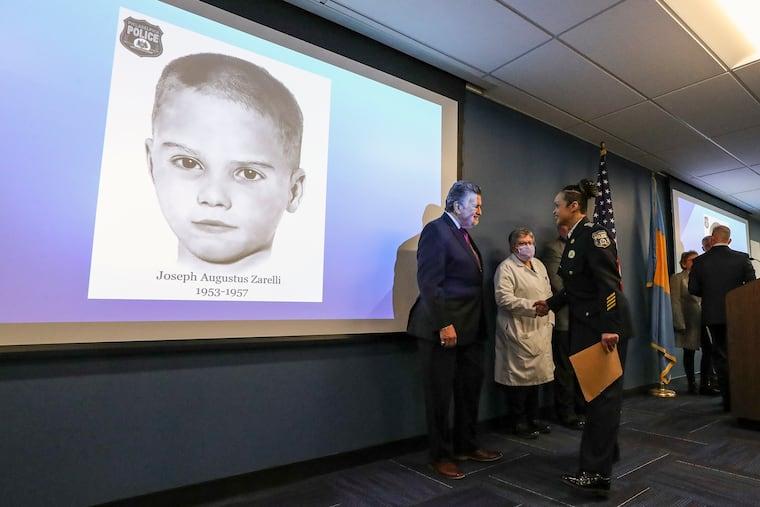
      In 2022, after more than 65 years, investigators finally achieved what many had thought impossible.

      Using advanced DNA analysis and forensic genealogy, authorities identified the child.

      His name was Joseph Augustus Zarelli.

      The announcement shocked both investigators and the public.

      For decades, Joseph had been known only as a mystery victim. Now he had a name, a birth certificate, and a place within a family history.

      The breakthrough demonstrated the extraordinary power of modern forensic science.

      What generations of detectives could not accomplish through traditional investigation methods was achieved through DNA technology and genealogical research.

      The identification represented one of the most significant cold-case breakthroughs in American criminal history.

      Why the Murder Case Is Still Not Fully Solved

      Although Joseph’s identity was finally established, many important questions remain unanswered.

      Who killed him?

      Who was responsible for the abuse he allegedly suffered?

      Were multiple people involved?

      Did individuals knowingly conceal information from investigators?

      Authorities have not publicly identified a killer. Many people connected to Joseph’s life are no longer alive, making the search for answers significantly more difficult.

      However, investigators have not closed the case.

      Modern detectives continue examining historical records, witness statements, family connections, and preserved evidence.

      The possibility remains that additional information could emerge.

      How Modern Technology Could Reveal More

      Today’s investigators possess tools unimaginable to detectives in 1957.

      Digital record databases allow researchers to cross-reference millions of historical documents within seconds.

      Artificial intelligence can assist in analyzing large collections of records and investigative files.

      Advanced DNA techniques continue evolving, enabling scientists to extract information from increasingly degraded biological samples.

      Forensic genealogy itself continues to improve each year.

      Evidence once considered useless may eventually yield new clues.

      In many cold cases, breakthroughs occur not because investigators discover entirely new evidence but because technology allows them to reinterpret evidence that already exists.

      The Boy in the Box investigation may benefit from exactly this process.

      Why Cold Cases Matter

      Some people wonder why authorities continue investigating crimes committed decades ago.

      The answer is simple.

      Justice has no expiration date.

      Every victim deserves to be identified. Every family deserves answers. Every unsolved homicide represents unfinished business for investigators and communities alike.

      Cold-case investigations also provide valuable lessons for modern law enforcement. They reveal investigative mistakes, highlight advances in forensic science, and demonstrate the importance of preserving evidence.

      Most importantly, they remind society that victims should never be forgotten.

      The Legacy of Joseph Augustus Zarelli

      For generations, the child found in a cardboard box symbolized one of America’s greatest criminal mysteries.

      Today, Joseph Augustus Zarelli is no longer anonymous.

      His name has been restored. His story is known. His existence is acknowledged.

      Yet the investigation continues.

      Detectives still hope that surviving records, family histories, witness accounts, or future technological advances may provide additional answers about what happened during the final days of his life.

      The case stands as a powerful example of why cold cases should never be abandoned.

      A mystery that seemed impossible to solve for 65 years eventually yielded one of its biggest secrets. That success offers hope that other historic murder investigations may one day reach similar breakthroughs.

      The Boy in the Box may finally have a name, but the search for complete justice is not over. As forensic science continues advancing, investigators remain determined to uncover every possible truth hidden within this tragic chapter of American history.

    1. The Villisca Axe Murders: A 114-Year-Old Murder Mystery That Could Still Be Solved Today

      The Villisca Axe Murders: A 114-Year-Old Murder Mystery That Could Still Be Solved Today

      Image

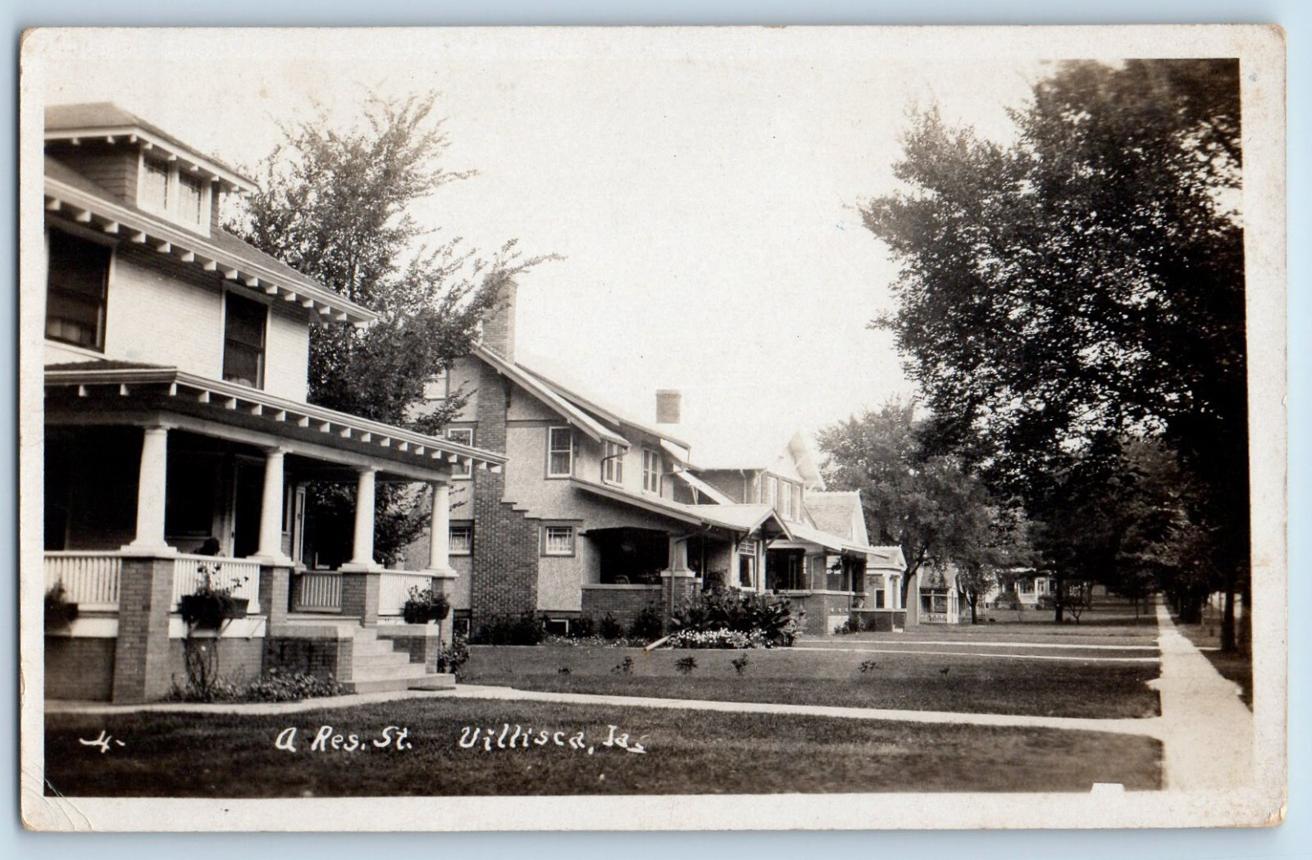
      Historic Villisca Axe Murder House in Iowa where the 1912 killings occurred.

      Image

      Exterior view of the famous Villisca murder house preserved as a historic site.

      Image

      Archival image connected to the Moore family before the tragedy.

      The Villisca Axe Murders: A 114-Year-Old Murder Mystery That Could Still Be Solved Today

      More than a century has passed since one of America’s most disturbing unsolved murder cases shocked the nation. On the night of June 9, 1912, eight people were brutally murdered inside a quiet home in the small town of Villisca, Iowa. Despite extensive investigations, multiple suspects, grand jury hearings, and decades of speculation, nobody was ever convicted of the crime.

      Today, the Villisca Axe Murders remain one of the most famous cold cases in American history. What makes the case especially fascinating is that many experts believe modern investigative techniques could still provide answers. Even after 114 years, the possibility of solving the mystery has not completely disappeared.

      A Peaceful Town Before the Horror

      In 1912, Villisca was a small farming community with a population of just over 2,000 people. Residents knew their neighbors, doors were often left unlocked, and violent crime was extremely rare.

      The Moore family was well known in town. Josiah Moore, a successful businessman, lived with his wife Sarah and their four children: Herman, Katherine, Boyd, and Paul. On the evening of June 9, the family attended a church program. Two young friends, Ina and Lena Stillinger, were invited to spend the night at the Moore home after the event.

      No one could have imagined that it would be their final night alive.

      The Discovery of the Crime

      On the morning of June 10, neighbors noticed that the Moore family’s daily routine seemed unusually quiet. Concerned, a neighbor entered the house and made a horrifying discovery.

      Inside, all eight occupants of the home had been murdered while they slept.

      The killer had used an axe found inside the house. The attacks were exceptionally violent, and investigators quickly realized they were dealing with one of the most brutal crimes in Iowa history.

      News of the murders spread rapidly. Reporters arrived from across the country, and the quiet town suddenly found itself at the center of a national sensation.

      A Crime Scene Filled with Mysteries

      Even from the beginning, investigators faced major challenges.

      The crime scene was contaminated almost immediately. Curious residents, reporters, and even local officials entered the house before proper evidence preservation procedures could be established. This was long before modern crime-scene protocols existed.

      As investigators searched the home, they discovered several strange details.

      Curtains had been drawn throughout the house. Mirrors were covered. A piece of clothing had been placed over one victim’s face. Food appeared to have been eaten in the kitchen after the murders.

      These unusual elements led investigators to believe the killer may have spent considerable time inside the home before leaving.

      The bizarre nature of the scene fueled endless theories and speculation that continue to this day.

      Suspects and False Leads

      Over the years, multiple suspects emerged.

      One of the most prominent was Reverend George Kelly, a traveling minister who had attended the church event on the evening before the murders. Kelly displayed unusual behavior during the investigation and reportedly confessed to the crime at one point.

      However, the confession contained inconsistencies and was later challenged. A jury ultimately failed to convict him.

      Another suspect was Frank Jones, a wealthy businessman and political rival of Josiah Moore. Some believed a personal dispute between the two men may have led to the murders. Others suggested that criminal associates could have been involved.

      Additional suspects surfaced throughout the decades, including drifters, serial offenders, and individuals linked to similar axe murders occurring in other states.

      Despite numerous investigations, none of the theories produced enough evidence for a conviction.

      Why the Case Remains Unsolved

      Several factors contributed to the failure to solve the Villisca Axe Murders.

      First, forensic science was extremely limited in 1912. Investigators had no DNA testing, fingerprint databases, digital records, surveillance footage, or advanced laboratory analysis.

      Second, the crime scene was heavily compromised. Important evidence may have been destroyed, moved, or contaminated within hours of the discovery.

      Third, media pressure complicated the investigation. Newspapers published rumors, accusations, and sensational claims that sometimes influenced public opinion and distracted investigators from solid evidence.

      Finally, conflicting witness statements created confusion. As years passed, memories faded, making it increasingly difficult to separate facts from speculation.

      These obstacles turned the Villisca murders into one of the most enduring mysteries in criminal history.

      Could Modern Technology Solve the Case?

      The most intriguing question today is whether a crime committed more than a century ago could still be solved.

      Surprisingly, the answer may be yes.

      Modern forensic science has solved many cold cases once thought impossible to crack. Advances in DNA technology, forensic genealogy, digital reconstruction, and evidence preservation have allowed investigators to identify suspects decades after crimes occurred.

      In recent years, numerous cold cases from the 1960s, 1970s, and even earlier have been solved using tiny biological samples that were previously unusable.

      If physical evidence from the Villisca case still exists in preserved form, modern laboratories might be able to analyze it using techniques unimaginable in 1912.

      Even degraded samples can sometimes reveal valuable information when processed with contemporary methods.

      The Role of Forensic Genealogy

      One of the biggest breakthroughs in modern criminal investigations is forensic genealogy.

      This method combines DNA analysis with family history research to identify individuals through distant relatives. It gained worldwide attention after helping identify the Golden State Killer decades after his crimes.

      For a historical case like Villisca, forensic genealogy could potentially provide new investigative leads if usable biological evidence were available.

      Although challenges remain due to the age of the case, experts continue to push the boundaries of what can be achieved through scientific advances.

      What seemed impossible twenty years ago is now becoming routine in many cold-case investigations.

      Why Public Interest Never Fades

      Part of what keeps the Villisca Axe Murders alive in public memory is the absence of answers.

      Most murder investigations eventually produce a suspect, a trial, or a confession that provides closure. Villisca never received that closure.

      Eight victims lost their lives, yet no one was ever held accountable in a court of law.

      The case also contains all the elements of a compelling mystery: a small town, multiple suspects, strange clues, conflicting theories, and a shocking act of violence that appears to have emerged from nowhere.

      For historians, criminologists, and true-crime enthusiasts, Villisca remains a haunting reminder that some mysteries can survive generations.

      Lessons for Modern Investigators

      The Villisca case highlights how dramatically criminal investigations have evolved.

      Today, crime scenes are carefully secured. Evidence is documented with photographs, digital mapping, and scientific collection procedures. DNA evidence can identify suspects with extraordinary accuracy.

      The mistakes made in 1912 provide valuable lessons for law enforcement agencies around the world.

      Many experts believe that if the same crime occurred today, investigators would likely have a far greater chance of identifying the perpetrator.

      A Mystery Waiting for Answers

      More than 114 years after the murders, the Villisca Axe Murders continue to fascinate researchers and investigators.

      The passage of time has not erased the questions surrounding that summer night in Iowa. Instead, advances in science have created new hope that evidence once considered useless might someday reveal the truth.

      Whether the mystery is solved next year, decades from now, or never at all, the case stands as one of history’s most remarkable examples of an unsolved murder investigation.

      The victims have long since passed into history, but the search for answers remains alive. As forensic technology continues to evolve, the possibility of finally identifying the person responsible may be greater today than at any point since 1912.

      For now, the Villisca Axe Murders remain an enduring reminder that even the oldest cold cases can still hold secrets waiting to be uncovered.