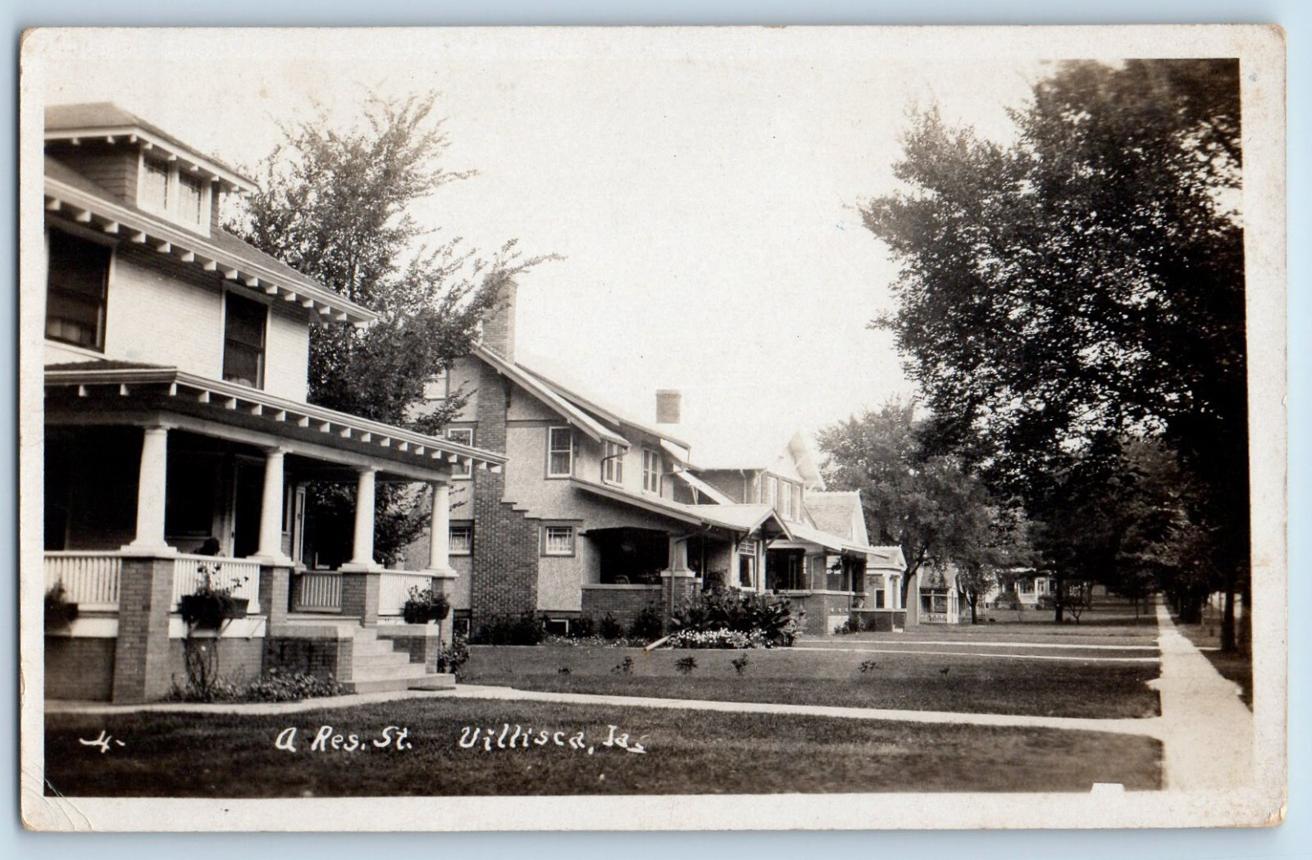

Historic Villisca Axe Murder House in Iowa where the 1912 killings occurred.

Exterior view of the famous Villisca murder house preserved as a historic site.

Archival image connected to the Moore family before the tragedy.
The Villisca Axe Murders: A 114-Year-Old Murder Mystery That Could Still Be Solved Today
More than a century has passed since one of America’s most disturbing unsolved murder cases shocked the nation. On the night of June 9, 1912, eight people were brutally murdered inside a quiet home in the small town of Villisca, Iowa. Despite extensive investigations, multiple suspects, grand jury hearings, and decades of speculation, nobody was ever convicted of the crime.
Today, the Villisca Axe Murders remain one of the most famous cold cases in American history. What makes the case especially fascinating is that many experts believe modern investigative techniques could still provide answers. Even after 114 years, the possibility of solving the mystery has not completely disappeared.
A Peaceful Town Before the Horror
In 1912, Villisca was a small farming community with a population of just over 2,000 people. Residents knew their neighbors, doors were often left unlocked, and violent crime was extremely rare.
The Moore family was well known in town. Josiah Moore, a successful businessman, lived with his wife Sarah and their four children: Herman, Katherine, Boyd, and Paul. On the evening of June 9, the family attended a church program. Two young friends, Ina and Lena Stillinger, were invited to spend the night at the Moore home after the event.
No one could have imagined that it would be their final night alive.
The Discovery of the Crime
On the morning of June 10, neighbors noticed that the Moore family’s daily routine seemed unusually quiet. Concerned, a neighbor entered the house and made a horrifying discovery.
Inside, all eight occupants of the home had been murdered while they slept.
The killer had used an axe found inside the house. The attacks were exceptionally violent, and investigators quickly realized they were dealing with one of the most brutal crimes in Iowa history.
News of the murders spread rapidly. Reporters arrived from across the country, and the quiet town suddenly found itself at the center of a national sensation.
A Crime Scene Filled with Mysteries
Even from the beginning, investigators faced major challenges.
The crime scene was contaminated almost immediately. Curious residents, reporters, and even local officials entered the house before proper evidence preservation procedures could be established. This was long before modern crime-scene protocols existed.
As investigators searched the home, they discovered several strange details.
Curtains had been drawn throughout the house. Mirrors were covered. A piece of clothing had been placed over one victim’s face. Food appeared to have been eaten in the kitchen after the murders.
These unusual elements led investigators to believe the killer may have spent considerable time inside the home before leaving.
The bizarre nature of the scene fueled endless theories and speculation that continue to this day.
Suspects and False Leads
Over the years, multiple suspects emerged.
One of the most prominent was Reverend George Kelly, a traveling minister who had attended the church event on the evening before the murders. Kelly displayed unusual behavior during the investigation and reportedly confessed to the crime at one point.
However, the confession contained inconsistencies and was later challenged. A jury ultimately failed to convict him.
Another suspect was Frank Jones, a wealthy businessman and political rival of Josiah Moore. Some believed a personal dispute between the two men may have led to the murders. Others suggested that criminal associates could have been involved.
Additional suspects surfaced throughout the decades, including drifters, serial offenders, and individuals linked to similar axe murders occurring in other states.
Despite numerous investigations, none of the theories produced enough evidence for a conviction.
Why the Case Remains Unsolved
Several factors contributed to the failure to solve the Villisca Axe Murders.
First, forensic science was extremely limited in 1912. Investigators had no DNA testing, fingerprint databases, digital records, surveillance footage, or advanced laboratory analysis.
Second, the crime scene was heavily compromised. Important evidence may have been destroyed, moved, or contaminated within hours of the discovery.
Third, media pressure complicated the investigation. Newspapers published rumors, accusations, and sensational claims that sometimes influenced public opinion and distracted investigators from solid evidence.
Finally, conflicting witness statements created confusion. As years passed, memories faded, making it increasingly difficult to separate facts from speculation.
These obstacles turned the Villisca murders into one of the most enduring mysteries in criminal history.
Could Modern Technology Solve the Case?
The most intriguing question today is whether a crime committed more than a century ago could still be solved.
Surprisingly, the answer may be yes.
Modern forensic science has solved many cold cases once thought impossible to crack. Advances in DNA technology, forensic genealogy, digital reconstruction, and evidence preservation have allowed investigators to identify suspects decades after crimes occurred.
In recent years, numerous cold cases from the 1960s, 1970s, and even earlier have been solved using tiny biological samples that were previously unusable.
If physical evidence from the Villisca case still exists in preserved form, modern laboratories might be able to analyze it using techniques unimaginable in 1912.
Even degraded samples can sometimes reveal valuable information when processed with contemporary methods.
The Role of Forensic Genealogy
One of the biggest breakthroughs in modern criminal investigations is forensic genealogy.
This method combines DNA analysis with family history research to identify individuals through distant relatives. It gained worldwide attention after helping identify the Golden State Killer decades after his crimes.
For a historical case like Villisca, forensic genealogy could potentially provide new investigative leads if usable biological evidence were available.
Although challenges remain due to the age of the case, experts continue to push the boundaries of what can be achieved through scientific advances.
What seemed impossible twenty years ago is now becoming routine in many cold-case investigations.
Why Public Interest Never Fades
Part of what keeps the Villisca Axe Murders alive in public memory is the absence of answers.
Most murder investigations eventually produce a suspect, a trial, or a confession that provides closure. Villisca never received that closure.
Eight victims lost their lives, yet no one was ever held accountable in a court of law.
The case also contains all the elements of a compelling mystery: a small town, multiple suspects, strange clues, conflicting theories, and a shocking act of violence that appears to have emerged from nowhere.
For historians, criminologists, and true-crime enthusiasts, Villisca remains a haunting reminder that some mysteries can survive generations.
Lessons for Modern Investigators
The Villisca case highlights how dramatically criminal investigations have evolved.
Today, crime scenes are carefully secured. Evidence is documented with photographs, digital mapping, and scientific collection procedures. DNA evidence can identify suspects with extraordinary accuracy.
The mistakes made in 1912 provide valuable lessons for law enforcement agencies around the world.
Many experts believe that if the same crime occurred today, investigators would likely have a far greater chance of identifying the perpetrator.
A Mystery Waiting for Answers
More than 114 years after the murders, the Villisca Axe Murders continue to fascinate researchers and investigators.
The passage of time has not erased the questions surrounding that summer night in Iowa. Instead, advances in science have created new hope that evidence once considered useless might someday reveal the truth.
Whether the mystery is solved next year, decades from now, or never at all, the case stands as one of history’s most remarkable examples of an unsolved murder investigation.
The victims have long since passed into history, but the search for answers remains alive. As forensic technology continues to evolve, the possibility of finally identifying the person responsible may be greater today than at any point since 1912.
For now, the Villisca Axe Murders remain an enduring reminder that even the oldest cold cases can still hold secrets waiting to be uncovered.
Leave a Reply