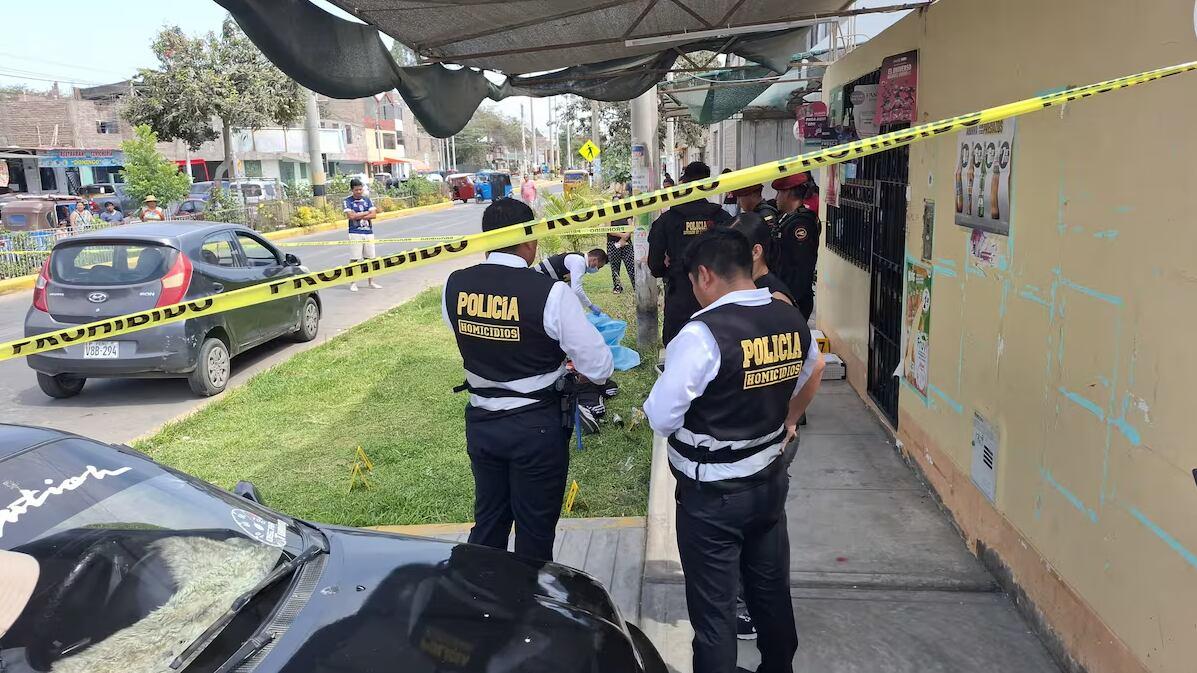
The Killer Thought the Case Was Dead: 36 Years Later, Detectives Uncovered the One Clue That Changed Everything


The Killer Thought the Case Was Dead: 36 Years Later, Detectives Uncovered the One Clue That Changed Everything
For decades, the murder file sat untouched inside a police evidence room.
The case had once dominated local headlines. Detectives spent years chasing leads, interviewing witnesses, and searching for a suspect. Yet despite their efforts, the killer remained unidentified.
As time passed, many people assumed the truth would never be discovered.
The victim’s family endured years of uncertainty.
Investigators retired.
Witnesses moved away.
Memories faded.
But hidden among thousands of pages of reports was a clue that had never fully revealed its importance.
Thirty-six years after the crime, that clue finally helped solve the mystery.
A Disappearance No One Could Explain
In October 1987, a 29-year-old woman disappeared while driving home after meeting friends.
She was expected home later that evening but never arrived.
Concern spread quickly among family members.
Phone calls went unanswered.
Friends had no information.
The following day, police officially began searching for her.
Volunteers joined search teams.
Local media covered the disappearance extensively.
Residents hoped she would be found alive.
Several days later, those hopes ended.
Her body was discovered in a wooded area miles from where she had last been seen.
Investigators confirmed she had been murdered.
The quiet community was stunned.
The Hunt for a Killer
Police immediately launched a homicide investigation.
Detectives interviewed hundreds of people connected to the victim.
Coworkers, neighbors, former classmates, relatives, and acquaintances were questioned.
Potential suspects were identified and investigated.
Crime-scene technicians collected every piece of evidence they could locate.
Among the evidence were fibers, fingerprints, tire impressions, and biological material.
At the time, forensic science offered only limited tools.
DNA testing was still developing and unavailable for many criminal investigations.
As a result, investigators could not fully analyze all the evidence they recovered.
Months of investigative work failed to identify the killer.
The case gradually stalled.
Years of Silence
The victim’s family never stopped searching for answers.
Every anniversary served as a painful reminder of what had happened.
Local newspapers occasionally published stories about the unsolved murder.
Detectives periodically reviewed the case.
New tips arrived from time to time.
Unfortunately, none produced significant breakthroughs.
The investigation officially became a cold case.
Still, police preserved all evidence collected during the original inquiry.
That decision would eventually make all the difference.
A Fresh Look at Old Evidence
More than three decades later, a cold-case unit reopened the investigation.
Advances in forensic science had transformed homicide investigations across the country.
Evidence once considered impossible to analyze could now be examined using sophisticated technology.
Detectives reviewed every detail from the original case.
During the review, investigators focused on a biological sample collected near the victim’s body.
In 1987, scientists could not obtain meaningful results from the material.
Modern laboratories, however, possessed much more advanced capabilities.
The sample was sent for testing.
What happened next shocked investigators.
The Discovery
Forensic scientists successfully extracted a complete DNA profile.
The evidence had survived for 36 years.
Suddenly, detectives possessed something they had never had before: a genetic signature connected to the killer.
The profile was entered into criminal databases.
Investigators hoped for an immediate match.
None appeared.
The suspect had likely never been required to submit DNA to law enforcement.
At first, the development seemed frustrating.
Yet detectives knew another option existed.
A Revolutionary Tool
Forensic genealogy has become one of the most important breakthroughs in modern criminal investigations.
Instead of searching directly for a suspect, investigators identify relatives who share portions of the same DNA.
Genealogists joined the investigation.
Thousands of records were examined.
Birth certificates.
Marriage records.
Obituaries.
Historical census information.
Public databases.
The process required patience and precision.
Gradually, a large family tree emerged.
Investigators narrowed the possibilities until only a handful of individuals remained.
One man quickly attracted attention.
An Unexpected Suspect
The suspect had lived in the area during the late 1980s.
Yet he had never been considered a major suspect.
His name appeared only briefly in the original case file.
At the time, detectives lacked evidence connecting him to the crime.
The DNA findings changed everything.
Investigators reviewed old witness statements.
Employment records.
Property documents.
Travel histories.
Several previously overlooked details suddenly became significant.
The suspect appeared increasingly connected to locations relevant to the murder.
Detectives believed they were getting close.
The Breakthrough
Investigators needed confirmation.
DNA evidence from the suspect would provide the final answer.
After obtaining a discarded item linked to him, forensic scientists performed additional testing.
The results were definitive.
The DNA matched the profile recovered from the crime scene.
After 36 years, investigators finally identified the killer.
The discovery marked one of the most important breakthroughs in the department’s history.
The Arrest
Police officers arrested the suspect at his home.
News of the arrest spread rapidly.
Many residents were stunned.
Some had forgotten the case entirely.
Others had spent decades wondering whether it would ever be solved.
For the victim’s family, the arrest triggered powerful emotions.
Relief.
Sadness.
Gratitude.
Anger.
After so many years, the truth had finally emerged.
The person responsible would finally face justice.
Inside the Trial
The prosecution relied heavily on forensic evidence.
Experts explained how DNA technology had advanced since the 1980s.
Genealogists described the family-tree research that led detectives to the suspect.
Investigators detailed the process of reopening the case and reviewing old evidence.
The defense attempted to challenge parts of the investigation.
However, the scientific evidence proved difficult to dispute.
Jurors listened as decades of unanswered questions were finally addressed.
After deliberation, they reached their decision.
The suspect was found guilty.
The victim’s family finally received the justice they had sought for more than three decades.
Why Cold Cases Are Being Solved Today
This case is part of a growing trend.
Across the United States, cold-case investigators are solving crimes once considered impossible to crack.
Modern DNA testing can analyze evidence far more effectively than earlier generations of technology.
Forensic genealogy has opened entirely new investigative pathways.
Preserved evidence from decades-old crimes is producing breakthroughs every year.
Thousands of unsolved homicides remain under active review.
Experts believe many more will be solved in the future.
A Lesson Hidden in an Evidence Box
The most remarkable part of this story is how close the solution remained all along.
The evidence existed from the very beginning.
Investigators collected it in 1987.
They preserved it carefully.
What they lacked was the technology needed to unlock its secrets.
Thirty-six years later, science provided the answer.
The killer believed the case had been forgotten.
He assumed the passage of time would protect him.
Instead, time became his enemy.
As technology improved, the evidence grew stronger.
The truth emerged.
And justice finally arrived.
For families waiting for answers in unsolved homicide cases, stories like this offer hope.
No matter how many years pass, a cold case can still be solved.
Sometimes all it takes is one clue, one detective willing to take another look, and one scientific breakthrough capable of revealing what has remained hidden for decades.
Additional Article Images
Image 1 – Missing Person Search


Alt Text: Search teams looking for clues after a woman disappeared.
Image 2 – Crime Scene Investigation


Alt Text: Investigators processing a homicide scene during the original investigation.
Image 3 – Cold Case Archive


Alt Text: Detectives reviewing evidence from a decades-old murder case.
Image 4 – DNA Testing Laboratory


Alt Text: Scientists examining DNA evidence using modern forensic technology.
Image 5 – Genealogy Investigation


Alt Text: Genealogists tracing family connections to identify a suspect.
Image 6 – Arrest of the Suspect


Alt Text: Suspect arrested decades after the murder occurred.
Image 7 – Courthouse and Justice


Alt Text: Courthouse where the cold-case murder finally reached a verdict.
Leave a Reply