He Escaped Justice for 41 Years—Until Detectives Reopened One Forgotten Murder File


He Escaped Justice for 41 Years—Until Detectives Reopened One Forgotten Murder File
For more than four decades, a killer believed he had escaped justice.
The investigation had stalled. Witnesses had disappeared. Detectives had retired. The crime had faded from newspaper headlines and public memory.
To most people, the case seemed destined to remain unsolved forever.
But hidden inside a police evidence room was a collection of clues waiting for the future.
When a team of cold-case investigators reopened the file 41 years later, they uncovered a trail that would eventually lead them to a shocking truth.
The case became another powerful reminder that even after decades have passed, murder investigations are never truly over.
A Summer Night Ends in Tragedy
The story began in July 1982.
A 27-year-old woman left work shortly after sunset and started the drive home.
She never arrived.
When family members were unable to reach her, concern quickly grew.
Friends contacted local police.
At first, investigators treated the situation as a missing-person case.
Officers searched nearby roads and questioned friends, coworkers, and relatives.
Days later, the search ended in heartbreak.
The woman’s body was discovered in a remote rural area outside the city.
Investigators quickly determined that she had been murdered.
The crime shocked the community.
Violent crimes were uncommon in the region, and residents struggled to understand how such a tragedy could occur.
Fear spread throughout the area as police searched for answers.
The Massive Investigation
The homicide investigation became one of the largest in local history.
Detectives interviewed hundreds of witnesses.
They followed thousands of tips.
Potential suspects were identified and questioned.
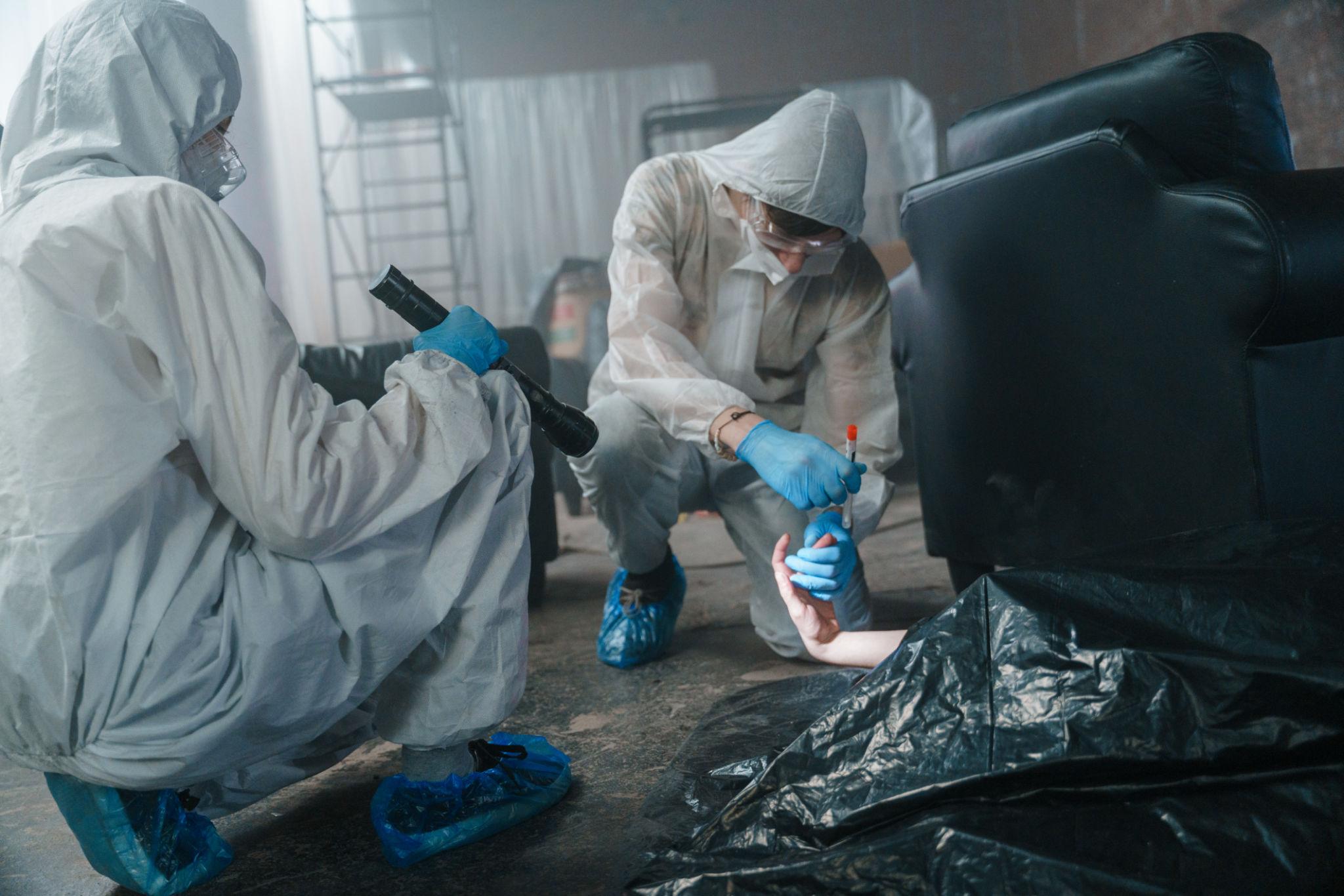
Crime-scene technicians carefully collected evidence, including fingerprints, fibers, hairs, and biological material.
Every lead appeared promising at first.
Yet one by one, they collapsed.
Investigators worked tirelessly for months.
Despite their efforts, they could not identify the killer.
The case slowly grew colder.
Years passed.
No arrests were made.
The victim’s family continued waiting for answers.
The Case Becomes a Cold Case
By the early 1990s, active investigative leads had nearly disappeared.
The murder officially became a cold case.
Although the investigation remained open, there were no obvious suspects and no significant new evidence.
For many families, this is the most difficult stage of a homicide investigation.
Hope begins to fade.
The public moves on.
Media attention disappears.
Yet investigators refused to close the file completely.
Evidence remained carefully stored.
Photographs were preserved.
Witness statements were archived.
Detectives understood that future advances in forensic science might one day provide answers.
That decision would prove critical.
A New Generation Takes Over
Forty-one years after the murder, a newly formed cold-case unit reviewed hundreds of unsolved homicides.
Among the files was the forgotten 1982 murder.
A detective assigned to the case noticed something important.
Several pieces of biological evidence collected at the crime scene had never undergone modern DNA analysis.
The evidence had been tested decades earlier, but technology at the time was extremely limited.
Today’s laboratories could perform far more advanced examinations.
The detective requested new testing.
The results exceeded everyone’s expectations.
A DNA Profile Emerges
Forensic scientists successfully extracted a complete DNA profile from evidence collected during the original investigation.
The achievement represented a major breakthrough.
For decades, detectives had possessed evidence but lacked the technology necessary to unlock its secrets.
Now they finally had a genetic profile connected to the killer.
Investigators entered the DNA profile into national databases.
No direct match appeared.
The suspect had apparently never provided DNA to law enforcement.
At first, the development seemed disappointing.
However, another powerful investigative tool had recently emerged.
The Genealogy Connection
Forensic genealogy has revolutionized criminal investigations across the United States.
Instead of searching for the suspect directly, investigators search for relatives who share portions of the same DNA.
Genealogists began constructing family trees linked to the unknown profile.
The process required extensive research.
Birth records.
Marriage certificates.
Obituaries.
Historical census documents.
Public databases.
Thousands of names were reviewed.
Months of work gradually narrowed the field.
Eventually, investigators identified a family line connected to the DNA evidence.
One individual quickly became the primary suspect.
The Man Nobody Suspected
The suspect had lived within driving distance of the victim in 1982.
Yet his name had never appeared prominently in the original investigation.
At the time, there had been no reason to focus on him.
The DNA evidence changed everything.
Detectives examined his background.
Employment records placed him near locations connected to the case.
Historical documents revealed several previously unnoticed links.
Witness statements from decades earlier suddenly appeared far more significant.
Piece by piece, investigators rebuilt the case.
The evidence pointed toward a single conclusion.
The Final Test
Detectives still required confirmation.
They needed a direct DNA sample from the suspect.
Investigators quietly conducted surveillance and eventually obtained an item he discarded in a public location.
The object was submitted to a forensic laboratory.
Scientists compared the DNA sample with the genetic profile recovered from the original crime-scene evidence.
The results were conclusive.
The profiles matched.
After 41 years, investigators finally knew who had committed the murder.
The breakthrough stunned everyone involved.
A mystery that had haunted investigators for decades was finally solved.
The Arrest
Police officers arrested the suspect at his residence.
The arrest generated national headlines.
Many people could not believe a murder committed more than four decades earlier had finally been solved.
Television news programs highlighted the role of DNA technology and forensic genealogy.
For the victim’s family, the arrest represented a moment they had almost stopped imagining.
Some relatives described feeling relief for the first time in decades.
Others said the arrest reopened painful memories while also providing long-awaited closure.
The emotions were complex.
But one fact was undeniable.
The truth had finally emerged.
Justice Arrives
During the trial, prosecutors presented extensive forensic evidence.
Experts explained how DNA technology had evolved since the early 1980s.
Genealogists described the family-tree research that led investigators to the suspect.
Detectives reconstructed the investigation from beginning to end.
Jurors listened as decades of unanswered questions were finally resolved.
The defense challenged aspects of the evidence but struggled to overcome the scientific findings.
After reviewing all testimony, the jury returned a guilty verdict.
The victim’s family finally received the justice they had sought for more than forty years.
Why Cold Cases Are Being Solved More Often
Cases like this are no longer rare.
Across the country, law-enforcement agencies are reopening old homicide investigations.
Evidence once considered useless is producing new DNA profiles.
Forensic genealogy is helping identify suspects who managed to avoid detection for decades.
Thousands of unsolved murders remain under active review.
Many contain preserved evidence that modern technology can analyze more effectively than ever before.
Experts believe numerous cold cases will be solved during the coming years.
The passage of time no longer guarantees safety for criminals.
The Legacy of One Forgotten File
The most remarkable part of this story is not the arrest.
It is the fact that investigators never stopped believing the case could be solved.
A forgotten file sat in storage for decades.
An evidence box remained untouched.
A biological sample waited patiently for science to catch up.
Eventually, it did.
For 41 years, the killer believed he had escaped accountability.
He watched time pass and assumed the investigation was over.
He was wrong.
The evidence never forgot.
The victim’s family never stopped hoping.
And detectives never completely gave up.
In the end, those three things changed everything.
The case serves as a powerful reminder that justice does not always arrive quickly.
Sometimes it takes decades.
But as modern cold-case investigations continue proving, it is never too late for the truth to come to light.
Additional Article Images
Image 1 – Missing Person Investigation


Alt Text: Search teams looking for a missing woman shortly after her disappearance.
Image 2 – Crime Scene


Alt Text: Investigators gathering evidence at the scene of a homicide.
Image 3 – Cold Case Files


Alt Text: Archived homicide files being reviewed decades after the crime.
Image 4 – DNA Analysis


Alt Text: Forensic scientists analyzing DNA evidence from a cold case.
Image 5 – Genealogy Research


Alt Text: Genealogists building family trees to identify a suspect.
Image 6 – Arrest


Alt Text: Police arresting a suspect decades after the murder occurred.
Image 7 – Courthouse


Alt Text: Courthouse where the cold-case murder finally reached a verdict.
Leave a Reply