The Murder That Refused to Stay Buried: How Detectives Solved a 30-Year-Old Cold Case and Finally Caught the Killer
For many families of murder victims, time can feel like an enemy. As years pass, witnesses move away, memories fade, and physical evidence grows older. Yet modern forensic science has proven that some killers can run, but they cannot hide forever.
One remarkable example comes from the United States, where investigators solved a murder nearly three decades after the crime was committed. The case became a powerful reminder that even when a murder appears impossible to solve, advances in technology and relentless detective work can eventually uncover the truth.
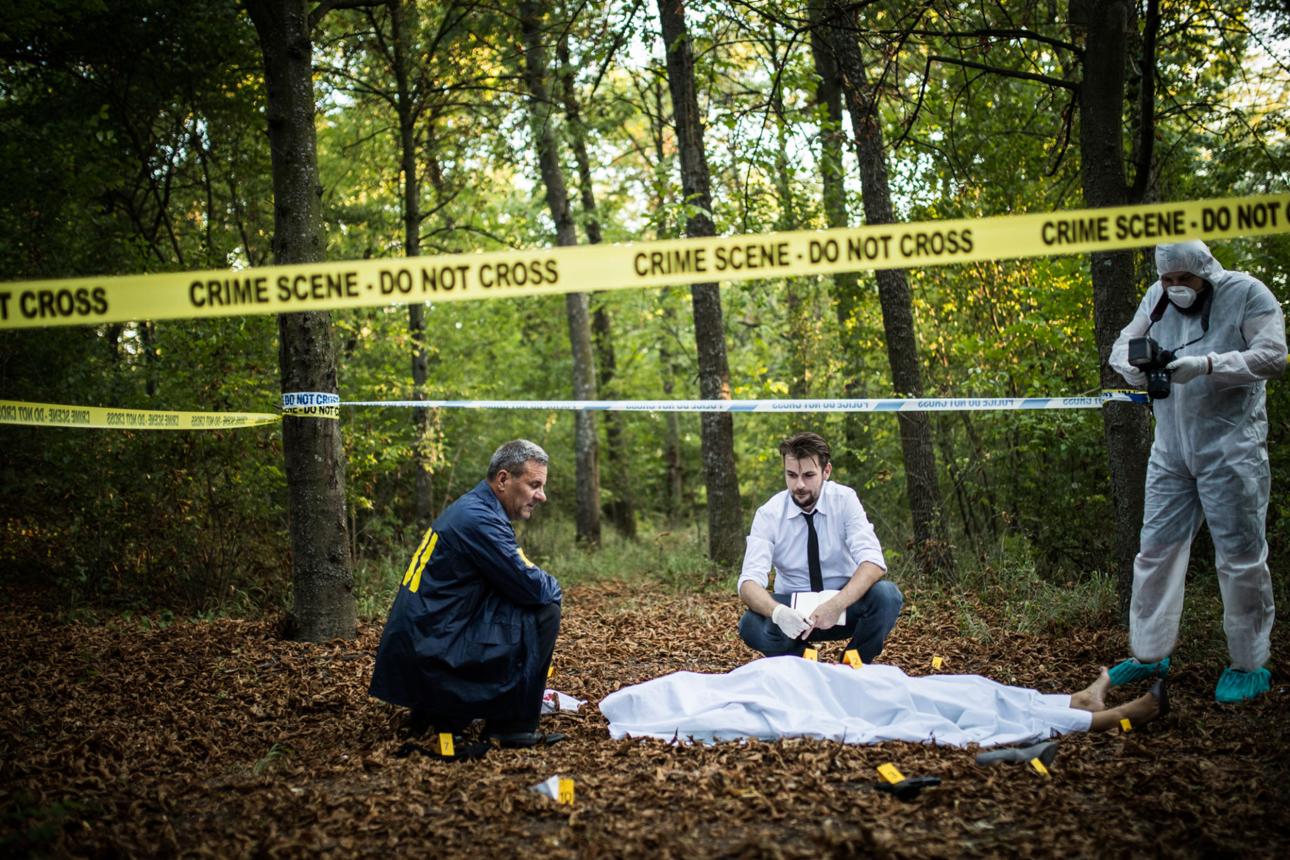
1. Crime Scene Investigation


A Shocking Discovery
In the late 1980s, a young woman disappeared after leaving work one evening. Friends and family became concerned when she failed to return home. She had no history of running away and was known to stay in close contact with loved ones.
After an extensive search, authorities discovered her body in a remote area outside the city. Investigators quickly determined that she had been murdered.
The crime shocked the local community. Residents were frightened, and police launched an intensive investigation. Detectives interviewed hundreds of people, examined physical evidence, and followed numerous leads.
Despite their efforts, no suspect could be identified.
The murder remained unsolved.


Alt Text: Crime scene investigators examining the location where a murder victim was discovered.
2. Detectives Reviewing the Case

The Investigation Goes Cold
During the months following the homicide, investigators worked tirelessly to identify the killer. They reviewed witness statements, checked alibis, and analyzed every piece of evidence available at the time.
Unfortunately, forensic technology in the late 1980s was limited compared to what exists today.
Although detectives collected biological evidence from the crime scene, the available testing methods could not produce enough information to identify a suspect. The evidence was carefully preserved and stored.
As years passed, the investigation gradually slowed.
Eventually, the case became what law enforcement calls a “cold case”—an unsolved crime that remains open but has no active leads.
For the victim’s family, the pain never disappeared. Birthdays, holidays, and anniversaries served as constant reminders that the person responsible had never been held accountable.


Alt Text: Detectives reviewing decades-old homicide case files and evidence.
3. Cold Case Evidence Storage

Decades of Unanswered Questions
Over the next several decades, different detectives periodically reviewed the case.
Each new investigator hoped to discover something that previous teams had missed.
The case files grew larger with every review. Boxes of reports, photographs, witness interviews, and forensic records filled police storage rooms.
Occasionally, new tips arrived from members of the public. However, none provided enough evidence to solve the mystery.
Many people believed the case would remain unsolved forever.
But investigators refused to give up.


Alt Text: Preserved evidence and documents stored in a police cold case archive.
4. DNA Forensic Analysis

A New Era of Forensic Science
In the early 21st century, forensic science experienced enormous advances.
DNA analysis became far more sophisticated and sensitive than it had been when the murder occurred. Evidence that once seemed useless could now reveal valuable information.
Recognizing these advancements, cold case detectives decided to reexamine the biological evidence collected decades earlier.
The preserved samples were sent to a modern forensic laboratory.
Scientists carefully extracted DNA profiles that could not have been generated when the crime originally occurred.
The results offered investigators their first major breakthrough in years.


Following the DNA Trail
The newly developed DNA profile did not immediately identify a suspect.
However, it provided detectives with a powerful new tool.
Investigators compared the DNA against criminal databases, searching for potential matches. Initially, no direct match appeared.
Instead of giving up, detectives explored emerging investigative techniques.
Using advanced genetic analysis and family-tree research, investigators began searching for relatives of the unknown individual whose DNA had been found at the crime scene.
This process required months of careful work.
Genealogists and detectives collaborated to build extensive family trees. They analyzed public records, historical documents, and other information that could help narrow the search.
Eventually, the investigation focused on one individual who had never been seriously considered a suspect during the original inquiry.


Alt Text: Forensic scientists using modern DNA technology to reexamine evidence.
5. Detectives Matching Evidence


Alt Text: Investigators comparing forensic evidence to identify a suspect.
6. Arrest of the Suspect

The Breakthrough
The suspect had lived near the victim at the time of the murder.
Although he had been briefly questioned years earlier, investigators lacked evidence linking him to the crime.
Now, decades later, detectives believed they had found the missing connection.
Authorities began quietly monitoring the suspect while gathering additional evidence.
At one point, investigators obtained a discarded item that contained the suspect’s DNA. Laboratory testing revealed a match with the genetic material recovered from the crime scene many years earlier.
The results were overwhelming.
After nearly thirty years, detectives finally knew the identity of the killer.
The Arrest
Police officers arrested the suspect and charged him with murder.
The arrest stunned the community.
Many residents had assumed the case was permanently unsolved. Some younger people had never even heard of the crime before news of the arrest appeared in local media.
For the victim’s family, the moment brought a mixture of emotions.
There was relief that investigators had never abandoned the case. There was gratitude for the detectives and forensic scientists who continued searching for answers.
But there was also sadness.
Nothing could bring back the loved one they had lost decades earlier.
Still, the arrest represented something important: justice.
The Trial
During the trial, prosecutors presented extensive forensic evidence.
Experts explained how DNA technology had advanced over the years and how investigators were able to connect the suspect to the crime scene.
Jurors reviewed witness testimony, forensic reports, and investigative findings accumulated over several decades.
The defense challenged portions of the evidence, arguing that memories fade and records become more difficult to verify as time passes.
However, the DNA evidence proved highly persuasive.
After hearing the case, the jury returned a guilty verdict.
The killer was convicted and sentenced for the murder.
Why Cold Cases Are Still Solvable
This case demonstrated an important reality about modern criminal investigations.
Time does not always protect criminals.
Many cold cases are being reopened because new technologies can uncover evidence that was impossible to detect years earlier.
Advances in DNA testing, fingerprint analysis, digital databases, and forensic genealogy have transformed law enforcement’s ability to investigate old crimes.
Evidence preserved decades ago may suddenly become the key to solving a mystery.
As a result, police departments across the United States continue reviewing unsolved homicide cases from the 1970s, 1980s, and 1990s.
Some investigations that once appeared hopeless are now producing arrests and convictions.


Alt Text: Police officers arresting the suspect after a major cold-case breakthrough.
7. Courthouse and Justice


A Message of Hope for Families
For families affected by unsolved murders, cold case breakthroughs provide hope.
Every solved case sends a message that justice remains possible, even after many years.
Detectives often describe cold case work as a promise made to victims and their loved ones—a promise that the search for truth will continue.
The successful resolution of this decades-old murder proved that determination, science, and patience can overcome even the longest passage of time.
While the killer managed to avoid capture for nearly thirty years, the evidence never disappeared.
It waited quietly in storage until technology finally caught up with the crime.
And when that happened, justice arrived at last.


Alt Text: Courthouse where the decades-old murder case was finally resolved.
SEO Image File Names
- cold-case-crime-scene-investigation.jpg
- detectives-review-old-murder-files.jpg
- cold-case-evidence-storage.jpg
- dna-forensic-analysis-laboratory.jpg
- forensic-evidence-comparison.jpg
- cold-case-suspect-arrest.jpg
- courthouse-murder-trial.jpg
Leave a Reply