The Killer Thought Time Had Erased the Crime: How a 35-Year-Old Murder Was Finally Solved


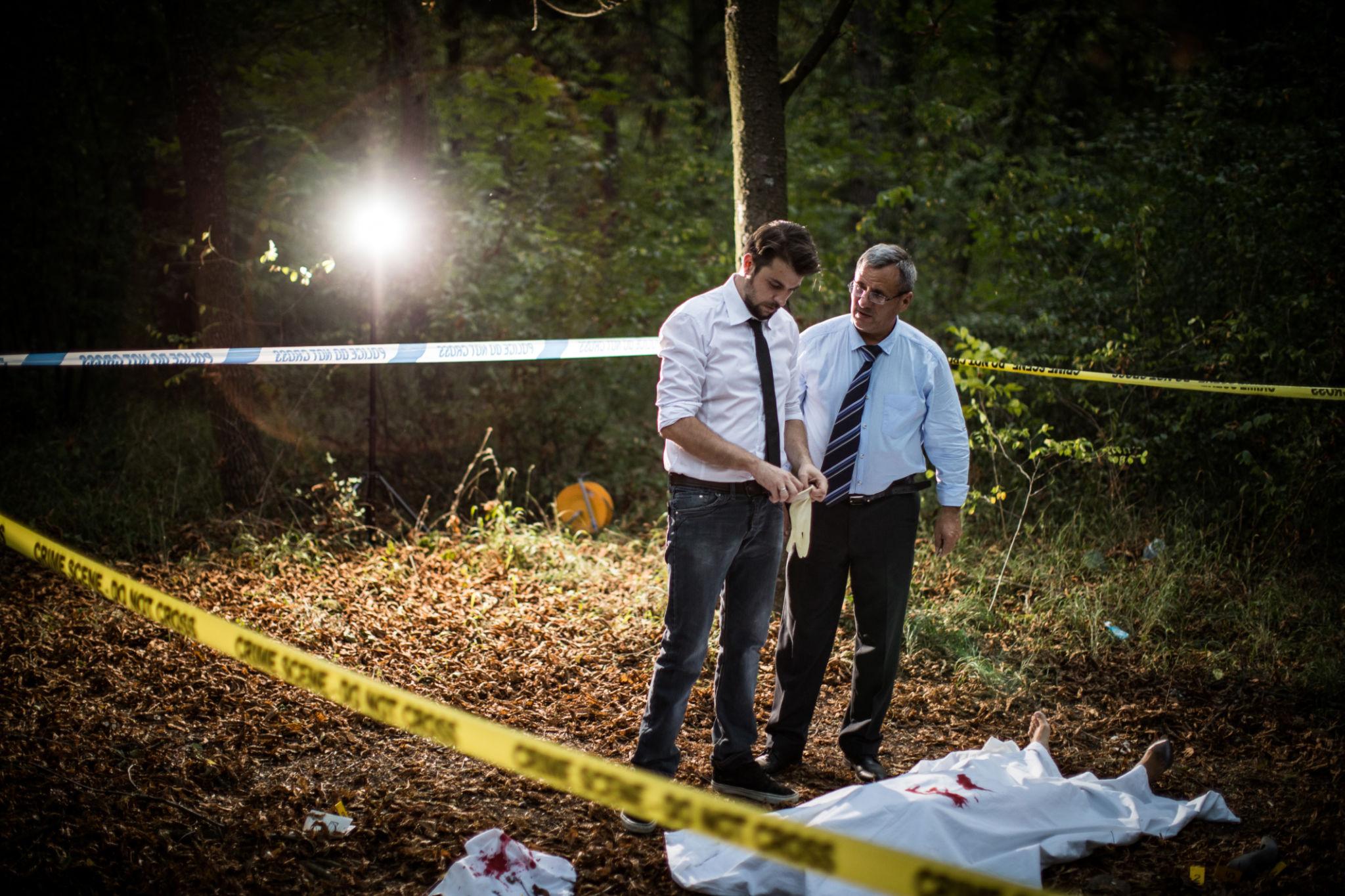
Detectives reopening a decades-old murder case using modern forensic technology.
The Killer Thought Time Had Erased the Crime: How a 35-Year-Old Murder Was Finally Solved
For decades, one family lived with unanswered questions. A young woman had been brutally murdered, her killer vanished without a trace, and investigators exhausted every lead available to them. As the years turned into decades, many people believed the case would never be solved.
But what the murderer never realized was that evidence has a long memory.
Thanks to advances in forensic science and the determination of cold-case investigators, a crime committed more than 35 years earlier would eventually be solved, proving that justice can arrive even after a lifetime of waiting.
A Community Shocked by Violence
In the late 1980s, a small American community was shaken when a young woman disappeared after leaving work one evening. Friends initially assumed she had simply changed plans, but concern quickly grew when she failed to return home or contact family members.
Police launched a search effort involving officers, volunteers, and local residents. Days later, the search ended in tragedy when her body was discovered in a secluded area several miles from where she had last been seen.
Investigators determined that she had been the victim of homicide.
The murder stunned residents. Violent crime was rare in the area, and many feared a dangerous killer was living among them.
The Original Investigation
Detectives immediately began gathering evidence. Witnesses were interviewed, vehicles were examined, and countless tips poured into the police department.
Investigators worked around the clock.
They developed several persons of interest and followed numerous leads. Every potential suspect was scrutinized, but no evidence directly connected anyone to the crime.
Although forensic technicians collected biological evidence from the scene, DNA technology was still in its early stages. The tools available at the time were far less powerful than those used today.
Without a clear suspect or conclusive forensic evidence, the investigation stalled.
Months became years.
Eventually, the murder joined the growing list of unsolved cold cases across the United States.
The Pain of Unanswered Questions
While the public slowly moved on, the victim’s family never could.
Every birthday, holiday, and anniversary served as a painful reminder of what had happened.
Parents grew older.
Friends started families of their own.
New generations emerged who had never even heard of the crime.
Yet one question remained:
Who killed her?
For law enforcement, the case represented unfinished business. Detectives retired, new officers joined the department, and boxes containing evidence were carefully preserved in storage.
No one knew whether those boxes would ever be useful again.
A New Generation of Detectives
More than three decades later, a newly assigned cold-case team reviewed the investigation.
Unlike the original detectives, these investigators had access to technology that would have seemed almost impossible in the 1980s.
They carefully examined every report, photograph, witness statement, and forensic sample collected during the original investigation.
One piece of preserved biological evidence caught their attention.
At the time of the murder, scientists had been unable to obtain a complete DNA profile from the sample.
Today, however, modern forensic laboratories possessed far more advanced testing methods.
Investigators decided to try again.
The Power of DNA Technology
The evidence was sent to a specialized forensic laboratory.
Using advanced techniques unavailable decades earlier, scientists successfully developed a detailed DNA profile.
For the first time, detectives possessed a genetic fingerprint that potentially belonged to the killer.
The profile was entered into law-enforcement databases.
No direct match appeared.
For some investigators, this might have been the end of the road.
Instead, the cold-case team explored a rapidly growing investigative field known as forensic genealogy.
Following a Family Tree
Forensic genealogy combines DNA science with traditional family-history research.
Rather than identifying a suspect directly, investigators search for relatives who share portions of the same genetic profile.
By building extensive family trees and tracing generations of relatives, detectives can gradually narrow their search.
The process requires patience and precision.
Researchers reviewed historical records, birth certificates, marriage licenses, census data, and public information.
Months of work eventually reduced the list of possible suspects to a handful of individuals.
One name stood out.
The man had lived near the victim at the time of the murder.
Although he had never been considered a major suspect, several details from the original investigation suddenly appeared significant.
Investigators believed they might finally have their killer.
Gathering the Final Evidence
Detectives understood that suspicion alone was not enough.
They needed undeniable proof.
The suspect was quietly monitored while investigators searched for an opportunity to collect a DNA sample legally.
Eventually, they obtained a discarded item linked to him.
The item was sent to the laboratory for testing.
Days later, the results arrived.
The DNA profile matched the genetic evidence preserved from the crime scene more than 35 years earlier.
Investigators finally had the answer they had been seeking for decades.
The evidence pointed to one individual and one individual only.
The Arrest
Police officers moved quickly.
The suspect was arrested and charged with murder.
News of the arrest spread rapidly through the community.
Many residents could scarcely believe it.
The crime had occurred so long ago that some people assumed it would remain unsolved forever.
Local news stations covered the story extensively.
For the victim’s family, the arrest was an emotional moment.
Some relatives had waited most of their lives for answers.
Others had passed away before learning the truth.
The arrest could not undo the loss, but it finally provided a measure of closure.
The Courtroom Battle
Prosecutors faced a unique challenge.
They needed to present evidence from a crime that had occurred more than three decades earlier.
Fortunately, the preserved DNA evidence was exceptionally strong.
Experts explained how modern forensic science had transformed the investigation and why the genetic match was considered highly reliable.
Jurors listened carefully as investigators described the years of work that led to the breakthrough.
The defense questioned the long delay between the crime and the arrest.
However, the scientific evidence proved difficult to overcome.
After reviewing all testimony and evidence, the jury returned a guilty verdict.
Justice had finally been served.
Why Cold Cases Are Being Solved Today
This case is not unique.
Across the United States, law-enforcement agencies are reopening old homicide investigations using modern technology.
DNA analysis has become more sensitive and accurate than ever before.
Forensic genealogy has helped identify suspects in crimes once considered impossible to solve.
Investigators are now solving murders committed in the 1970s, 1980s, and even earlier.
Evidence that sat untouched in storage for decades is suddenly revealing new clues.
Cases once labeled hopeless are producing arrests and convictions.
The Lesson Hidden in Every Cold Case
Criminals often believe that if they avoid capture long enough, they will escape justice forever.
Modern forensic science is proving otherwise.
A fingerprint, a DNA sample, a forgotten witness statement, or a piece of preserved evidence can remain valuable for generations.
The murderer’s greatest mistake was believing that time would erase the crime.
Instead, time preserved the evidence.
And when technology finally caught up, the truth emerged.
More than 35 years after a young woman’s life was stolen, investigators delivered the answer her family had waited decades to hear.
Justice may have been delayed.
But it was not denied.
Additional Images for the Article
Crime Scene Discovery


Alt Text: Police investigators processing a remote crime scene after a homicide.
Cold Case Files


Alt Text: Decades-old murder investigation records being reexamined.
DNA Breakthrough


Alt Text: Scientists using advanced DNA technology to solve a cold case.
Arrest and Justice


Alt Text: Arrest and prosecution of a suspect decades after the murder.
Leave a Reply