The Secret Stayed Buried for 38 Years: How One Forgotten Clue Finally Exposed a Killer


The Secret Stayed Buried for 38 Years: How One Forgotten Clue Finally Exposed a Killer
For nearly four decades, a murderer walked free.
He built a life, went to work, attended family gatherings, and blended into society. Few people suspected that he was hiding a terrible secret connected to a brutal crime committed years earlier.
Meanwhile, the victim’s family endured decades of heartbreak.
Investigators never stopped searching for answers, but every promising lead eventually reached a dead end.
Then, almost 40 years after the murder, a single forgotten clue changed everything.
What followed became one of the most remarkable cold-case breakthroughs in modern criminal investigation.
A Night That Changed Everything
The story began during the autumn of 1984 in a quiet American town.
A 24-year-old woman failed to return home after spending the evening with friends.
Initially, family members assumed she had encountered car trouble or decided to stay elsewhere for the night.
When she failed to appear the following day, concern quickly turned into panic.
Police launched a missing-person investigation.
Volunteers joined search efforts.
Flyers were distributed throughout the community.
Days later, searchers discovered her body in a wooded area several miles outside town.
The young woman had been murdered.
News of the crime spread rapidly.
Residents were shocked that such violence could occur in their peaceful community.
Fear replaced the sense of safety many people had once taken for granted.
The Investigation Begins
Detectives immediately assembled a task force.
The victim’s friends, coworkers, relatives, and acquaintances were interviewed.
Dozens of leads emerged during the first weeks of the investigation.
Police examined vehicles, searched properties, and followed numerous tips.
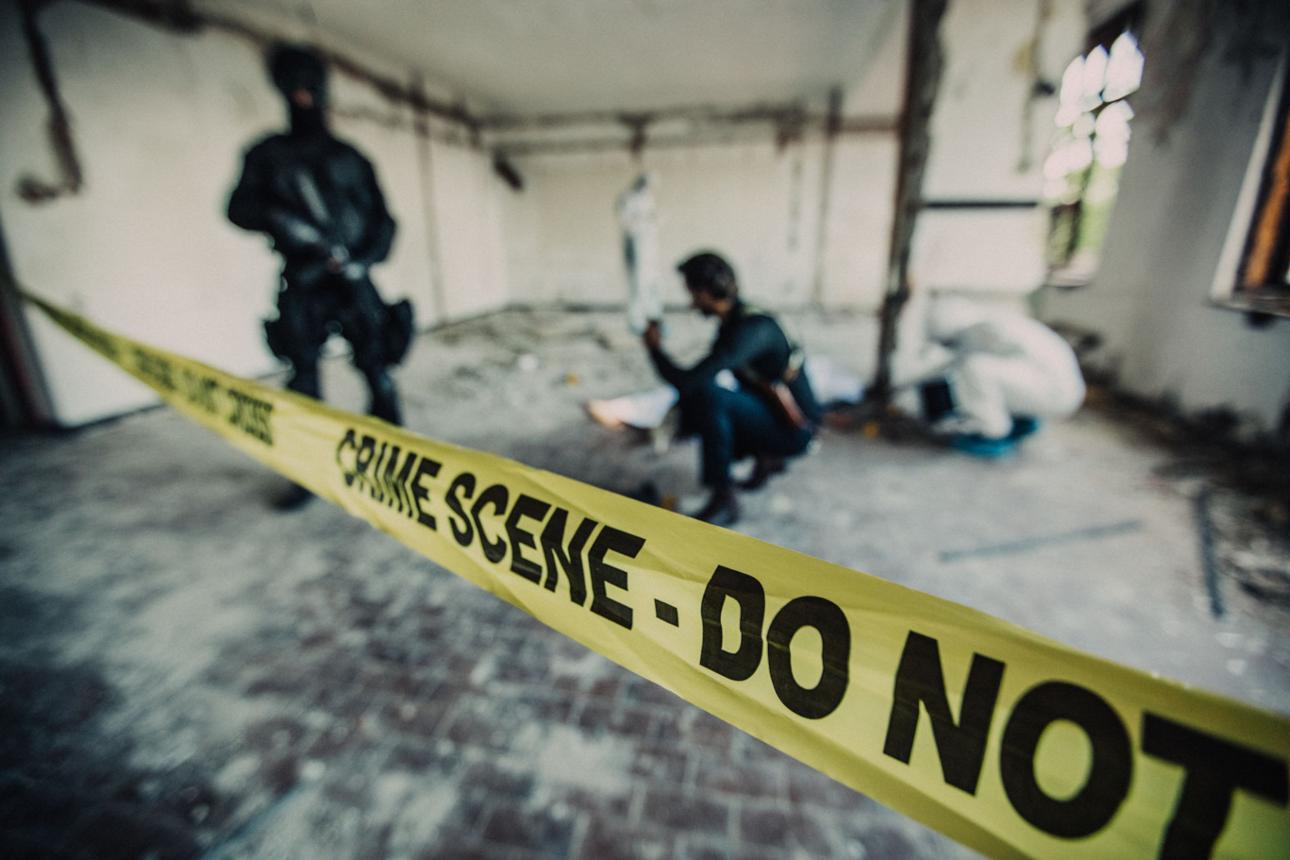
At the crime scene, investigators carefully collected physical evidence.
Several items appeared potentially significant, including fibers, fingerprints, and biological material.
Unfortunately, the technology available during the 1980s was limited.
Many forensic techniques commonly used today either did not exist or were still being developed.
Although investigators worked tirelessly, they failed to identify a suspect.
Months passed.
Then years.
The case remained unsolved.
A Family Refuses to Give Up
As time moved forward, the victim’s family refused to let her memory fade.
They organized memorial events and maintained regular contact with law enforcement.
Every anniversary brought renewed media attention.
Each year, relatives hoped someone would come forward with information.
But no breakthrough arrived.
Parents grew older.
Friends moved away.
Witnesses’ memories faded.
Some investigators retired.
The case gradually entered what law enforcement refers to as cold-case status.
Yet it was never officially closed.
The evidence remained preserved.
The questions remained unanswered.
And somewhere, the killer remained free.
The Forgotten Evidence Box
Nearly 38 years later, a newly assigned cold-case detective reviewed the file.
Unlike many previous investigators, he decided to examine every piece of evidence personally.
While searching through storage archives, he located an evidence box that had not been reexamined in years.
Inside were items collected during the original investigation.
Among them was a small biological sample preserved since 1984.
At the time of the murder, scientists had been unable to extract meaningful information from the sample.
Modern technology, however, offered new possibilities.
The detective requested advanced DNA testing.
Few people expected significant results.
What happened next surprised everyone.
Science Unlocks the Truth
Forensic scientists successfully recovered a complete DNA profile from the decades-old evidence.
The sample had survived nearly four decades in storage.
The results provided investigators with something they had never possessed before:
A genetic fingerprint of the killer.
Detectives compared the DNA profile against criminal databases.
No direct match appeared.
Once again, the investigation seemed stuck.
But modern investigators had another option.
The Genealogy Revolution
Forensic genealogy has transformed cold-case investigations across the United States.
Rather than searching directly for a suspect, investigators search for distant relatives who share portions of the same DNA.
Genealogists constructed enormous family trees using public records and historical documents.
The process was slow and meticulous.
Thousands of names were examined.
Generations of family connections were mapped.
After months of research, investigators narrowed their search to a specific branch of a family tree.
Several potential suspects emerged.
One individual immediately attracted attention.
A Man Hidden in Plain Sight
The suspect had lived in the region during the 1980s.
He had never been arrested for violent crime.
He had never appeared prominently in the original investigation.
In fact, most detectives had never seriously considered him.
Yet the DNA evidence pointed directly toward him.
Investigators quietly examined his background.
Old records revealed unexpected links to locations connected to the victim.
Witness statements from the original case suddenly appeared more significant.
Piece by piece, the puzzle began fitting together.
Obtaining Confirmation
Detectives needed definitive proof.
A DNA profile from the suspect would provide the final answer.
Investigators conducted surveillance and eventually obtained an item discarded by the suspect in a public location.
The object was sent to a forensic laboratory.
Scientists compared the recovered DNA with the profile obtained from the original crime-scene evidence.
The results were conclusive.
The probability of the DNA belonging to another person was extraordinarily small.
After 38 years, investigators finally identified the killer.
The Arrest
Police officers executed an arrest warrant.
The suspect was taken into custody without incident.
For many members of the community, the news was difficult to believe.
The murder had occurred so long ago that some residents barely remembered it.
Others had assumed the case would never be solved.
Television stations and newspapers covered the arrest extensively.
The story quickly attracted national attention.
People were fascinated by the idea that a crime committed decades earlier had finally been solved through modern science.
Facing Justice
During court proceedings, prosecutors presented a detailed timeline of the investigation.
Forensic experts explained how DNA technology had evolved over the years.
Genealogists described the family-tree research that led investigators to the suspect.
Detectives testified about the evidence recovered from both the crime scene and the suspect.
The defense attempted to challenge aspects of the investigation.
However, the DNA evidence proved compelling.
Jurors listened carefully as decades of mystery were unraveled.
After deliberation, they reached a verdict.
The suspect was found guilty of murder.
Justice had finally arrived.
Why Old Cases Are Being Solved Today
Across America, cold-case units are achieving similar breakthroughs.
Evidence collected decades ago is being reexamined using technologies unavailable at the time of the original investigations.
DNA analysis has become dramatically more sensitive.
Forensic genealogy has opened entirely new pathways for identifying suspects.
Even tiny samples of biological evidence can now provide investigators with valuable information.
As a result, cases once considered hopeless are producing arrests and convictions.
Experts believe thousands of unsolved murders may eventually be solved through these methods.
The Importance of Never Giving Up
The most remarkable aspect of this story is not the technology.
It is persistence.
The victim’s family never stopped seeking answers.
Investigators never officially closed the file.
Evidence was preserved instead of discarded.
Because people refused to give up, justice remained possible.
The killer believed time would protect him.
For nearly four decades, he was right.
Then science caught up.
A forgotten evidence box, a preserved DNA sample, and a determined group of investigators accomplished what once seemed impossible.
The secret that had remained buried for 38 years was finally exposed.
And a family that had waited almost a lifetime finally learned the truth.
The case stands as a powerful reminder that while justice may sometimes move slowly, it can still arrive—even after decades have passed.
For cold-case investigators everywhere, that possibility is what keeps them searching.
And for families still waiting for answers, it offers something even more important:
Hope.
Additional Images for the Article
1. Crime Scene Search


Alt Text: Detectives searching a wooded area connected to a decades-old murder investigation.
2. Cold Case Evidence


Alt Text: Archived evidence and files from an unsolved homicide investigation.
3. DNA Laboratory Analysis


Alt Text: Forensic experts analyzing DNA evidence from a decades-old crime.
4. Arrest and Trial


Alt Text: Murder suspect arrested and brought before the court decades after the crime.
Leave a Reply