For 52 Years, the Killer Believed He Got Away With Murder—Then One DNA Test Changed Everything


For 52 Years, the Killer Believed He Got Away With Murder—Then One DNA Test Changed Everything
For more than half a century, one of the most baffling murder mysteries in America remained unsolved.
The victim’s family waited decades for answers. Detectives came and went. Witnesses grew older. Important memories faded with time.
Yet one thing never disappeared.
The evidence.
Locked away inside a police evidence room, a small piece of physical evidence quietly waited for technology to catch up.
When it finally did, investigators uncovered a truth that had remained hidden for 52 years.
The case became another powerful example of why cold-case detectives never stop searching for answers.
A Quiet Town Shaken by Tragedy
In the spring of 1971, residents of a small American town woke to shocking news.
A young woman had disappeared after leaving work late one evening.
Family members initially believed she might have experienced car trouble or decided to stay with friends.
As hours turned into days, concern rapidly escalated.
Police organized search teams and appealed to the public for information.
The entire community became involved.
Flyers appeared on bulletin boards.
Local newspapers published photographs.
Volunteers searched roads, fields, and wooded areas.
Several days later, searchers made a heartbreaking discovery.
The missing woman had been murdered.
Her body was found in an isolated location outside town.
The crime horrified residents and left investigators facing an enormous challenge.
The Early Investigation
Detectives immediately launched a large-scale homicide investigation.
Officers interviewed coworkers, neighbors, friends, and relatives.
Potential suspects were identified and questioned.
Every lead was pursued.
Investigators worked around the clock.
At the crime scene, forensic specialists carefully collected evidence that might help identify the killer.
Among the items recovered were biological samples, fingerprints, fibers, and personal belongings.
Unfortunately, forensic science in the early 1970s was limited.
DNA testing did not yet exist.
Many of the techniques investigators rely on today were decades away from development.
Despite months of effort, detectives failed to identify a suspect.
The case gradually stalled.
The killer remained unknown.
Decades of Frustration
The victim’s family never stopped hoping.
Every anniversary reopened old wounds.
Relatives continued asking investigators whether new leads had emerged.
For years, the answer remained the same.
No breakthrough.
No arrest.
No justice.
As decades passed, the case officially became a cold case.
However, detectives never considered it forgotten.
The evidence remained carefully preserved.
Every few years, investigators reviewed the file again, hoping advances in technology might reveal something new.
Most reviews produced nothing.
But eventually, everything changed.
A New Detective Takes Another Look
More than fifty years after the murder, a newly assigned cold-case investigator began reviewing unsolved homicides.
He examined thousands of pages of reports.
Photographs were digitized.
Witness statements were analyzed.
Old evidence was inventoried.
While reviewing the file, the detective noticed several pieces of biological evidence that had never undergone modern DNA testing.
The evidence had been preserved remarkably well.
Laboratory experts believed there was a chance useful genetic material could still be recovered.
The detective requested testing immediately.
No one expected the results to transform the case.
The DNA Breakthrough
Scientists carefully examined the preserved evidence using modern forensic technology.
After weeks of testing, they successfully developed a DNA profile.
For the first time in more than five decades, investigators possessed a genetic signature connected to the crime.
Excitement spread through the department.
Detectives entered the profile into criminal databases.
Unfortunately, no direct match appeared.
The killer had either never been arrested or his DNA was not present in the system.
For some investigations, this would have ended the search.
But cold-case detectives now had another powerful weapon.
Forensic genealogy.
Building a Family Tree
Forensic genealogy combines genetic science with traditional family-history research.
Instead of searching directly for the suspect, investigators search for relatives who share portions of the same DNA.
Even distant relatives can provide valuable clues.
Genealogists spent months constructing enormous family trees.
Public records were examined.
Birth certificates were reviewed.
Marriage records and census information were analyzed.
Thousands of names were considered.
Gradually, investigators narrowed the search.
Eventually, they identified a small group of individuals who could potentially match the DNA evidence.
One man stood out from the others.
The Unexpected Suspect
The suspect had lived near the victim during the early 1970s.
At the time of the murder, he was a young adult with no significant criminal record.
Because investigators had no reason to suspect him during the original investigation, he had never received extensive scrutiny.
Now, however, the DNA evidence placed him at the center of the case.
Detectives began reviewing his history.
Old employment records, addresses, and witness statements revealed several previously overlooked connections.
The evidence became increasingly difficult to ignore.
Investigators believed they had finally found the killer.
Confirming the Truth
Detectives still needed direct proof.
They quietly monitored the suspect and eventually obtained an item he discarded in a public location.
Laboratory experts extracted DNA from the item.
The sample was compared with the genetic profile recovered from the crime-scene evidence.
The results were extraordinary.
The DNA matched.
After 52 years, investigators finally knew who committed the murder.
The breakthrough stunned everyone involved.
Some detectives had spent entire careers wondering whether the case would ever be solved.
Now they finally had an answer.
The Arrest
Police arrested the suspect and charged him with murder.
News of the arrest quickly spread across the country.
Many people found it difficult to believe that a crime committed more than half a century earlier had finally been solved.
Television networks covered the story extensively.
Newspapers published detailed timelines of the investigation.
Experts praised the role of forensic science and genealogy.
For the victim’s family, the arrest brought a mixture of relief and sadness.
The years lost could never be recovered.
But the truth had finally emerged.
Justice Delayed but Not Denied
During court proceedings, prosecutors presented extensive forensic evidence.
Experts explained how modern DNA testing had identified the suspect.
Genealogists described the painstaking family-tree research that helped narrow the search.
Detectives detailed the investigative process that ultimately led to the arrest.
The defense attempted to challenge portions of the evidence.
However, the scientific findings proved compelling.
Jurors listened carefully as investigators reconstructed events from more than fifty years earlier.
When deliberations ended, justice finally arrived.
The suspect was convicted.
The victim’s family finally received answers they had waited decades to hear.
Why More Cold Cases Are Being Solved
Cases like this are becoming increasingly common.
Across the United States, law-enforcement agencies are reopening old murder investigations using modern forensic tools.
Evidence once considered useless can now produce detailed DNA profiles.
Forensic genealogy has transformed how investigators identify suspects.
Cold-case units are solving murders from the 1960s, 1970s, 1980s, and beyond.
Thousands of unsolved homicides remain under review.
Experts believe many more arrests are likely in the coming years.
The passage of time no longer guarantees safety for criminals.
The Lesson Hidden Inside Every Cold Case
For decades, the killer believed he had escaped justice.
He watched investigators struggle.
He saw the case fade from headlines.
He assumed the evidence would never speak.
But evidence has a remarkable memory.
A single preserved sample survived for 52 years.
That tiny piece of evidence ultimately accomplished what generations of investigators could not.
It revealed the truth.
This case stands as a reminder that justice sometimes moves slowly, but it can still arrive.
For families waiting for answers, it offers hope.
For investigators, it provides motivation.
And for criminals who believe time will protect them, it delivers a warning:
Cold cases are never truly cold.
Sometimes they are simply waiting for the future.
Additional Article Images
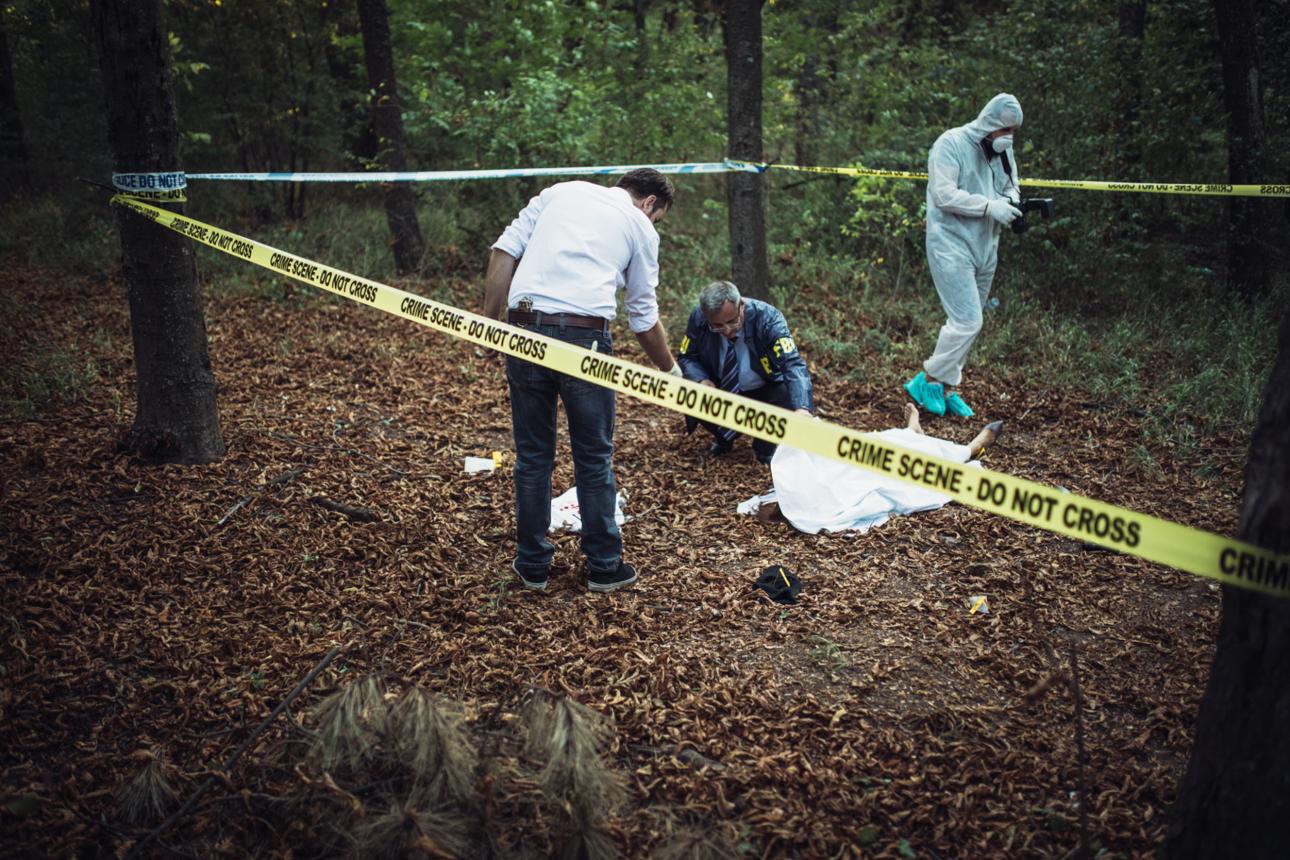
Image 1 – Crime Scene Investigation


Alt Text: Investigators processing the area where evidence related to the murder was discovered.
Image 2 – Missing Person Search


Alt Text: Search teams looking for clues after a young woman disappeared.
Image 3 – Cold Case Files


Alt Text: Detectives reviewing decades-old homicide files.
Image 4 – DNA Laboratory


Alt Text: Modern forensic scientists examining DNA evidence from a cold case.
Image 5 – Genealogy Investigation


Alt Text: Genealogists building family trees to identify a murder suspect.
Image 6 – Arrest


Alt Text: Suspect arrested decades after the original crime.
Image 7 – Courthouse


Alt Text: Courthouse where the decades-old murder case finally reached justice.
Leave a Reply